Jungfrau
Bernese Oberland, Switzerland
Oxygen Analysis — Oximeter
Oxygen comparison
Required Preparation
At 4158 m, with 60% oxygen available, perceived effort increases compared to sea level.
How to prepare
- Occasional training: specific preparation and progressive acclimatization are required before the summit.
- Regular training: plan acclimatization stops and monitor oxygen saturation.
- Endurance training: respect physiological adaptation times even if fitness level is high.
- Consider a sports medical assessment before the ascent.
Route and Trail
Peak Guide
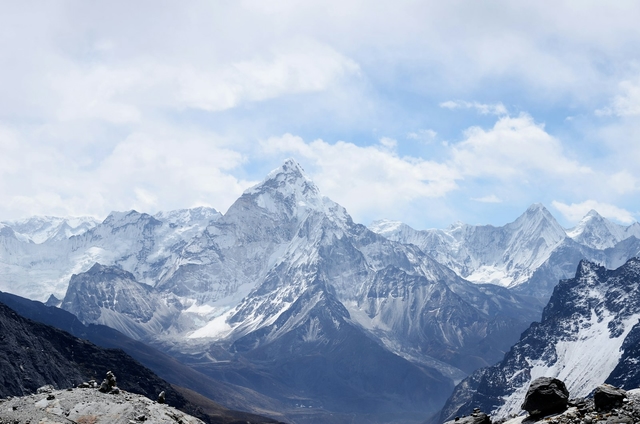
The Jungfrau sits at 4,158 metres on the border between Canton Bern and Canton Valais, forming the highest peak of the famous Eiger–Mönch–Jungfrau trilogy. You can see it from Interlaken on a clear day — a white pyramid that looks impossibly sharp against the sky. Getting there is the thing. At the summit you're breathing 60% of the oxygen you'd have at sea level. Your body will know the difference.
What makes the Jungfrau unusual is its starting point. The Jungfraubahn railway brings you to 3,454 metres — Europe's highest railway station — in just over an hour from Kleine Scheidegg. That's an asset for logistics. It's also a physiological trap if you don't respect what rapid ascent does to your body.
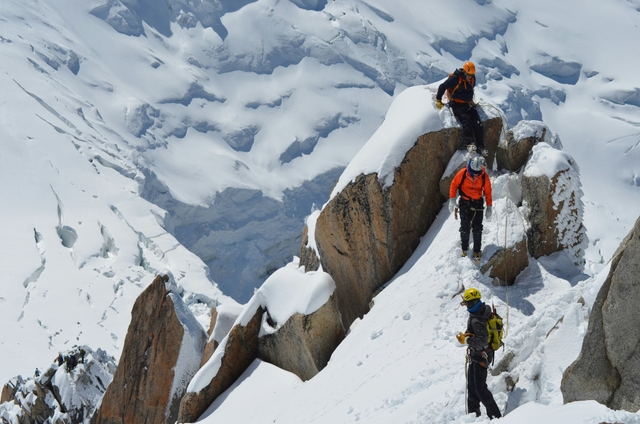
The normal route itself is PD — snow and ice to 45°, some exposed mixed terrain near the top. Serious alpine terrain. Not extreme. A competent alpinist with glacier experience and the right gear can do it. Someone without that experience, on the other hand, has no business being on the final ridge alone.
Technical Details
| Feature | Detail |
|---|---|
| Altitude | 4158m |
| GPS Coordinates | 46.5333°N, 7.9667°E |
| Available oxygen | 60% of sea level |
| Starting point | Jungfraujoch Railway Station (3454m) |
| Elevation gain | ~850m (total terrain from Jungfraujoch) |
| Round-trip distance | ~9.0 km (estimate) |
| Ascent time | 4–5h (from Jungfraujoch, day 2) |
| Difficulty | PD — snow and ice up to 45° |
| Best season | Mid-June–September |
| GPX available | No |
Route
The normal route starts at Jungfraujoch station (3,454m), reached by train from Kleine Scheidegg via the Wengernalp and Jungfrau railways. Most climbers arrive mid-afternoon, walk 30 minutes to the Mönchsjochhütte (3,657m), rest overnight, and leave for the summit before dawn.
From the hut, the route crosses the Jungfraufirn — the broad glacier between the Mönch and Jungfrau. The initial section is relatively flat; crampons are useful but the terrain isn't steep yet. The route aims for Kranzbergegg, then climbs toward the Rottalsattel (3,885m), which is the key turning point. From the saddle, the southeast ridge rises to the summit. It's the crux: compacted snow and ice, real exposure, mixed rock sections near the top.
Conditions vary. After fresh snowfall, the difficulty can increase significantly. Check the route status with the Mönchsjochhütte before committing.
Essential gear: ice axe, 10-point crampons, harness, rope (30m minimum), glacier goggles. If you've never used an ice axe in anger, hire an IFMGA-certified guide. This isn't about ego — it's about not becoming one of the cases the mountain rescue statistics are built on.
Oxygen & Acclimatization
Here's the thing about the Jungfrau that catches people out: the train. You can go from 560m (Interlaken) to 3,454m (Jungfraujoch) in under two hours. Your lungs don't know how to handle that. Haemoglobin hasn't started upregulating. The acclimatization process hasn't begun.
At 3,454m — just the railway station — a non-acclimatized person might already see their SpO2 drop below 85%. Some feel fine. Others get a headache within an hour. That variability is real and unpredictable. The Jungfraujoch station keeps supplemental oxygen on hand precisely because AMS among tourists is routine, not rare.
The AMS risk is moderate at summit altitude. One night at the Mönchsjochhütte (3,657m) gives your body a chance to start adapting. Resting heart rate drops a bit. SpO2 creeps up a few points. The next morning's 500-metre climb to the summit is more manageable.
At the summit, acclimatized fit climbers typically show SpO2 readings between 80% and 88%. Below 78% at rest with symptoms — headache, nausea, loss of coordination — don't push the last metres. Descend. The mountain will be there next season.
Preparation
Essential gear
- Ice axe and crampons (10-point minimum)
- Harness, rope (30m+), carabiners
- Technical layered clothing: temperatures at the Jungfrau can drop below -20°C in bad weather
- Category-4 glacier goggles
- High SPF sunscreen — glacier glare burns even through thin cloud cover
- 1.5+ litres of water for summit day
Physical condition You don't need to be a professional alpinist. You need to be fit, comfortable on alpine terrain, and confident with ice axe and crampon technique. If you're new to glaciers, get an IFMGA guide. A good guide reads terrain and conditions in ways that take years to learn; that knowledge is worth more than the fee.
Acclimatization If you can, spend a night at 2,000–2,500m before going up to Jungfraujoch. It cuts the AMS risk significantly. If that's not possible: arrive at Jungfraujoch in the afternoon, sleep at the Mönchsjochhütte, go for the summit the next morning. Don't try to do it in a single day push from the valley.
Best timing Mid-June through late September. July and August have the most stable conditions. Early June usually still has more snow — sometimes better consolidated ice, but check current conditions. The Mönchsjochhütte typically opens mid-May; before that, the route is a serious winter proposition.
Frequently Asked Questions
Is the Jungfrau suitable for a non-expert alpinist?
It's not a beginner route, but it's not reserved for seasoned alpinists either. If you've been on glacier terrain before, you know how to self-arrest with an ice axe, and you've climbed snowy peaks above 3,000m — you're in the right ballpark. Missing one of those elements? Hire a guide. It's not an admission of weakness; it's how experienced mountaineers handle routes outside their current skill set.
What actually happens physiologically on the train up to Jungfraujoch?
You ascend nearly 2,900 metres in about 2 hours. Your respiratory system doesn't have time to compensate. At 3,454m, atmospheric pressure is roughly 65% of sea level. Your body hasn't started producing extra red blood cells — that takes days. AMS symptoms (headache, nausea, fatigue) can appear within 30–90 minutes of arriving. The Jungfraujoch station has supplemental oxygen available. That fact alone tells you what to expect if you push too fast.
What's the real AMS risk on the Jungfrau?
Moderate, if you manage the ascent correctly. The main issue isn't the absolute altitude — 4,158m is serious but not extreme — it's the speed of gain that the railway enables. Research at the Jungfraujoch station documents significant AMS rates in unacclimatized visitors. For alpinists who sleep at the hut, the risk drops substantially. Use the Oxymeter calculator to estimate your expected saturation at the starting altitude.
Do I need to book the Mönchsjochhütte in advance?
Yes. In summer — especially July and August weekends — the hut fills up fast. Book directly through the SAC (Swiss Alpine Club) hut reservation system well in advance. Showing up without a reservation mid-season is a gamble you'd rather not take at 3,657m.
Access the complete guide for free
Enter your email and get immediate access + PDF download
What you need for Jungfrau
Buying through these links supports Oxymeter at no extra cost to you — thank you! As an Amazon Associate, Oxymeter earns from qualifying purchases.
Indicative list. Adapt equipment to weather conditions and your experience level.
Has Oxymeter been useful to you?
Oxymeter is built by one person: servers, data and hours of work are all self-funded, and everything stays free with no ads. If you'd like to help, you can buy us a coffee.
Buy us a coffeeEven a small gesture makes a big difference. Thank you!
Open the page for up-to-date gear links: https://www.oxymeter.it/en/vetta/jungfrau/
Sources and References
The information on this page has been verified from the following sources
Related peaks
Discover other peaks in the same area
Go deeper with our articles
Guides and tips to prepare yourself
Calculate your altitude sickness risk
7 questions — AMS risk estimate based on WMS guidelines