On Everest, every breath delivers less than one third of the oxygen you breathe at sea level. Not because the air has a different composition — it is still 20.9% O₂ — but because atmospheric pressure at 8,848 m is only 314 hPa, compared with 1,013 hPa at sea level. The result: the partial pressure of oxygen drops from 21.2 kPa to 6.6 kPa, and the lungs cannot transfer enough O₂ to the blood to maintain normal cognitive and motor function.
Use the Oxymeter calculator to visualize the available oxygen at any altitude.
The Data: Oxygen and Pressure Along the Route to the Summit
| Altitude (m) | Reference Location | Pressure (hPa) | O₂ Available | Typical SpO₂ |
|---|---|---|---|---|
| 0 | Sea Level | 1013 | 100% | 98–99% |
| 5,364 | Everest Base Camp | 540 | 53% | 80–85% |
| 6,400 | Camp I | 470 | 46% | 74–80% |
| 7,200 | Camp II | 409 | 40% | 68–75% |
| 7,900 | Camp III | 360 | 36% | 61–69% |
| 8,300 | Camp IV — South Col | 335 | 33% | 58–66% |
| 8,848 | Everest Summit | 314 | 31% | 55–65% |
Source: ISA model (ISO 2533:1975) + experimental data from West JB. et al., PMC.
Why Breathing on Everest Is So Difficult
The problem is not the quantity of O₂ in the air, but the partial pressure (pO₂): the force with which oxygen molecules "push" across the alveolar membrane and into the blood. At low partial pressure, the transfer is less efficient — like trying to inflate a tyre with a weakened pump.
At 8,848 m the pO₂ is approximately 6.6 kPa. Haemoglobin, which transports oxygen in the blood, becomes only 55–65% saturated rather than the normal 98–99%. The brain, which consumes roughly 20% of the body's total oxygen, enters a state of critical hypoxia: slowed thinking, hallucinations, loss of coordination.
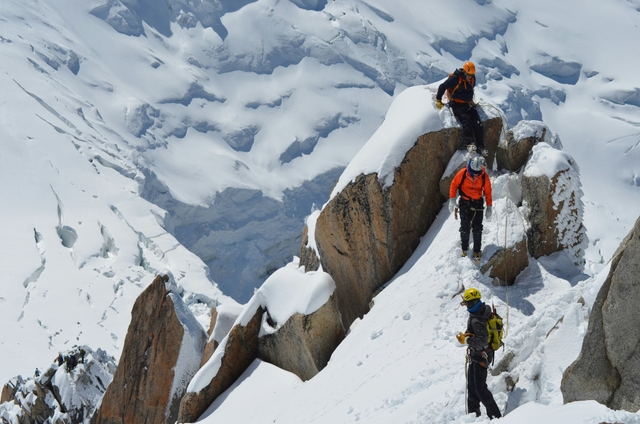
Climbers describe progress near the summit as walking through a waking dream: every step requires 6–10 breaths, and processing simple decisions — where to place the next foot, how to clip a carabiner — becomes as demanding as solving a complex mathematical problem.
The Death Zone: What Happens Above 8,000 m
Above 8,000 m the human body cannot acclimatize permanently. Acclimatization — producing more red blood cells, adjusting blood pH, increasing ventilation — takes weeks and works well up to approximately 5,500–6,000 m. Higher than that, deterioration outpaces adaptive capacity.
In the Death Zone:
- Brain cells sustain damage even at rest
- The risk of pulmonary and cerebral edema (HACE/HAPE) becomes very high
- The heart operates at maximum capacity even for minimal activity
- Dehydration accelerates (hyperventilation + cold, dry air)
- The risk of frostbite is extreme (average summit temperature in May: −36 °C)
This is why climbers attempting the Everest summit aim to cover the entire section above 8,000 m within a single 12–18 hour push, without sleeping.
How Do Climbers Survive Without Supplemental Oxygen?
The first ascent without supplemental oxygen was achieved by Reinhold Messner and Peter Habeler on 8 May 1978. Before that, the scientific community considered survival on the summit without artificial O₂ to be physiologically impossible.
The mechanism that makes it possible is extreme progressive acclimatization, which can take months:
- Ventilatory adaptation: breathing rate increases even at rest, lowering blood CO₂ and shifting the haemoglobin dissociation curve
- Polycythaemia: red blood cell production increases by 20–30%, raising oxygen-carrying capacity
- Cerebral adaptation: the brain partially learns to function with less O₂, slowing down some non-essential processes
- Favourable genetics: certain genetic variants (EPAS1, known as the "Sherpa gene") enhance the capacity for oxygen extraction
Even with all these adaptations, SpO₂ on the summit without supplemental oxygen falls to 55–65%. At sea level those values would indicate a medical emergency. On Everest, for a few hours, the human body manages to tolerate them — but at the cost of significant physical deterioration.
Comparison with Other Extreme Peaks
| Peak | Altitude (m) | O₂ Available | Climbable without supplemental O₂? |
|---|---|---|---|
| Aconcagua | 6,961 | 43% | Yes, for most climbers |
| Cho Oyu | 8,188 | 34% | Rarely |
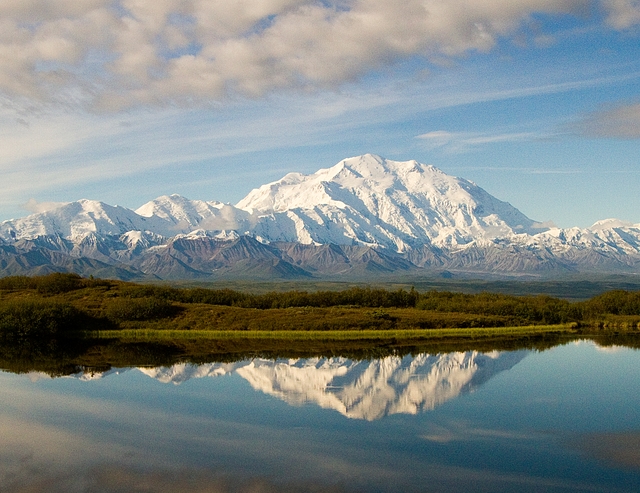
| Denali | 6,190 | 45% | Yes, normally |
| K2 | 8,611 | 32% | Rarely |
| Everest | 8,848 | 31% | Yes, but only for a very few and with great risk |
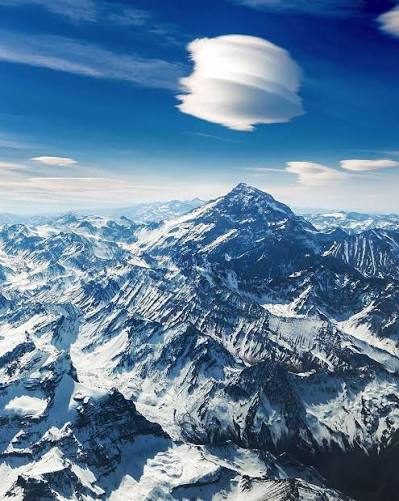
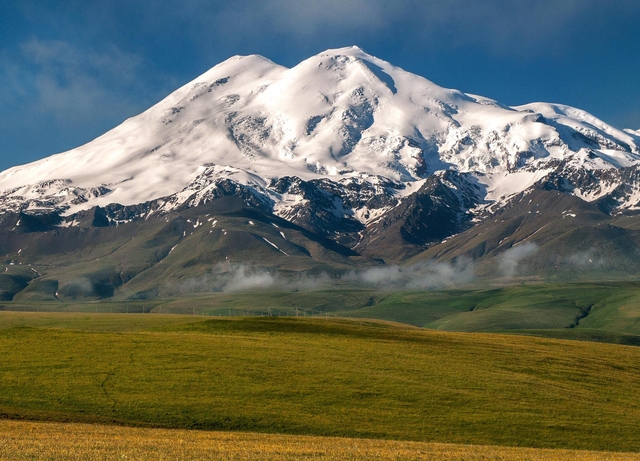
To understand what oxygen availability feels like at more accessible altitudes — such as Aconcagua (6,962 m) or Mount Elbrus (5,642 m) — you can simulate oxygen and pressure values with the calculator.
Read more: All guides on altitude health
Frequently Asked Questions
How much oxygen is on Everest?
At 8,848 m the pressure is 314 hPa — 31% of sea level. The pO₂ falls to 6.6 kPa compared with 21.2 kPa at sea level. Every breath delivers less than one third of the oxygen molecules you would inhale at sea level.
Can you climb Everest without supplemental oxygen?
Yes, but it is an exceptional achievement. The first unsupported ascent was made by Messner and Habeler in 1978. It requires years of preparation, extreme acclimatization, and favourable genetics. The vast majority of climbers use bottled oxygen above 7,000–8,000 m.
Where does the Death Zone start?
Conventionally at 8,000 m. Above that altitude, physical deterioration exceeds the body's recovery capacity even during rest. Climbers aim to minimize time spent in this zone.
What is SpO₂ on the Everest summit?
Between 55% and 65% even in acclimatized climbers, according to experimental data published on PMC. At sea level those values would signal a medical emergency; at altitude the body has developed partial adaptations that allow them to be tolerated for brief periods.
Want to calculate available oxygen at your next target altitude? Use the Oxymeter calculator — enter the elevation and instantly get the O₂ percentage, atmospheric pressure, and physiological risk level.
To explore the complete oxygen table from 0 to 8,848 m check the dedicated article.