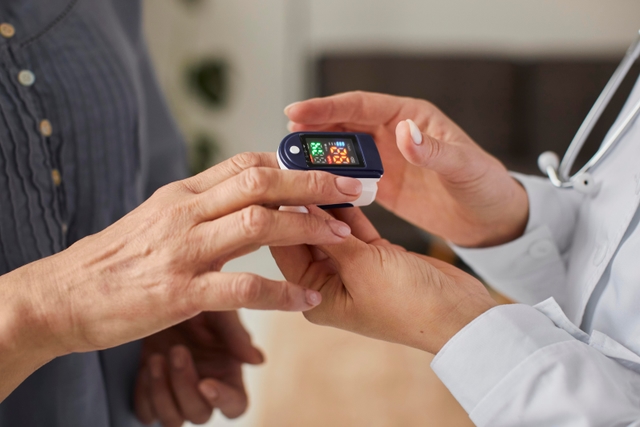
95–100% is normal resting SpO₂: how to measure it with a pulse oximeter, smartwatch or app, which readings signal trouble and when to see a doctor.

Below 90% needs medical review, below 85% is an emergency: how to read a pulse oximeter or smartwatch SpO2 alert and when to call 911.
±10-15% error in camera-only blood oxygen apps. Smartwatches with a real SpO2 sensor get closer, at ±3-5%. When to trust each, and when not to.
3 ways to estimate oxygen saturation without a pulse oximeter: smartwatch, clinical signs, altitude calculator. When to trust each, when not to.
95–100% SpO₂ is normal for a healthy adult at sea level — what the device measures, how it works, and normal values by age and altitude explained.
How to track nocturnal SpO₂ if you suspect sleep apnea: normal values, which devices work, warning signs, and when to see a doctor.
95-100% is normal SpO₂ in a healthy adult; ≥95% in children, often 93-97% past 65. Values by age, altitude, and when a reading is an emergency.
88–94% SpO₂: how to use a pulse oximeter with COPD, when to act, CE-certified models, and how to log your data for your pulmonologist.