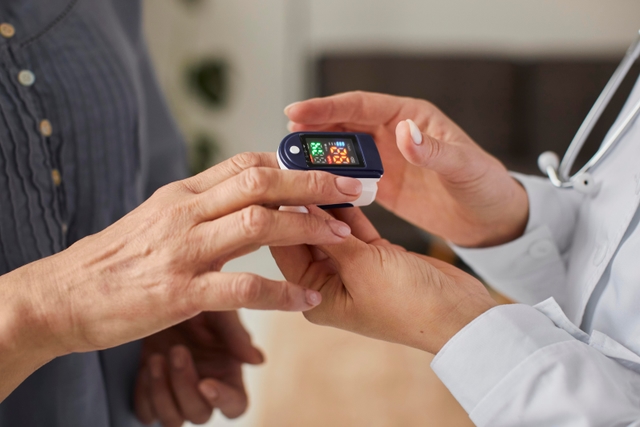
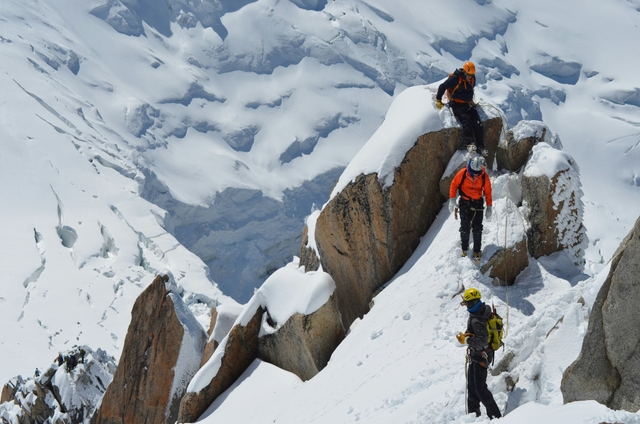
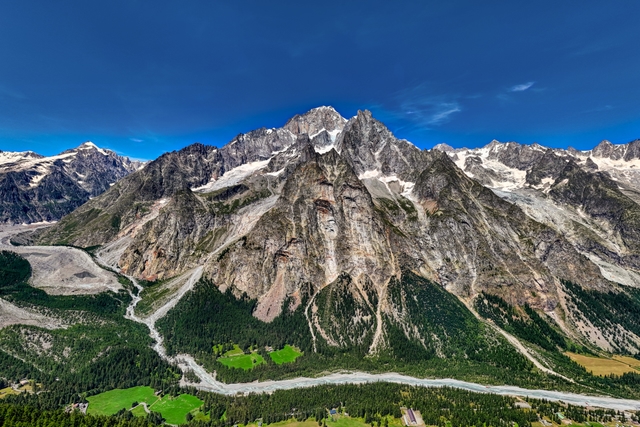
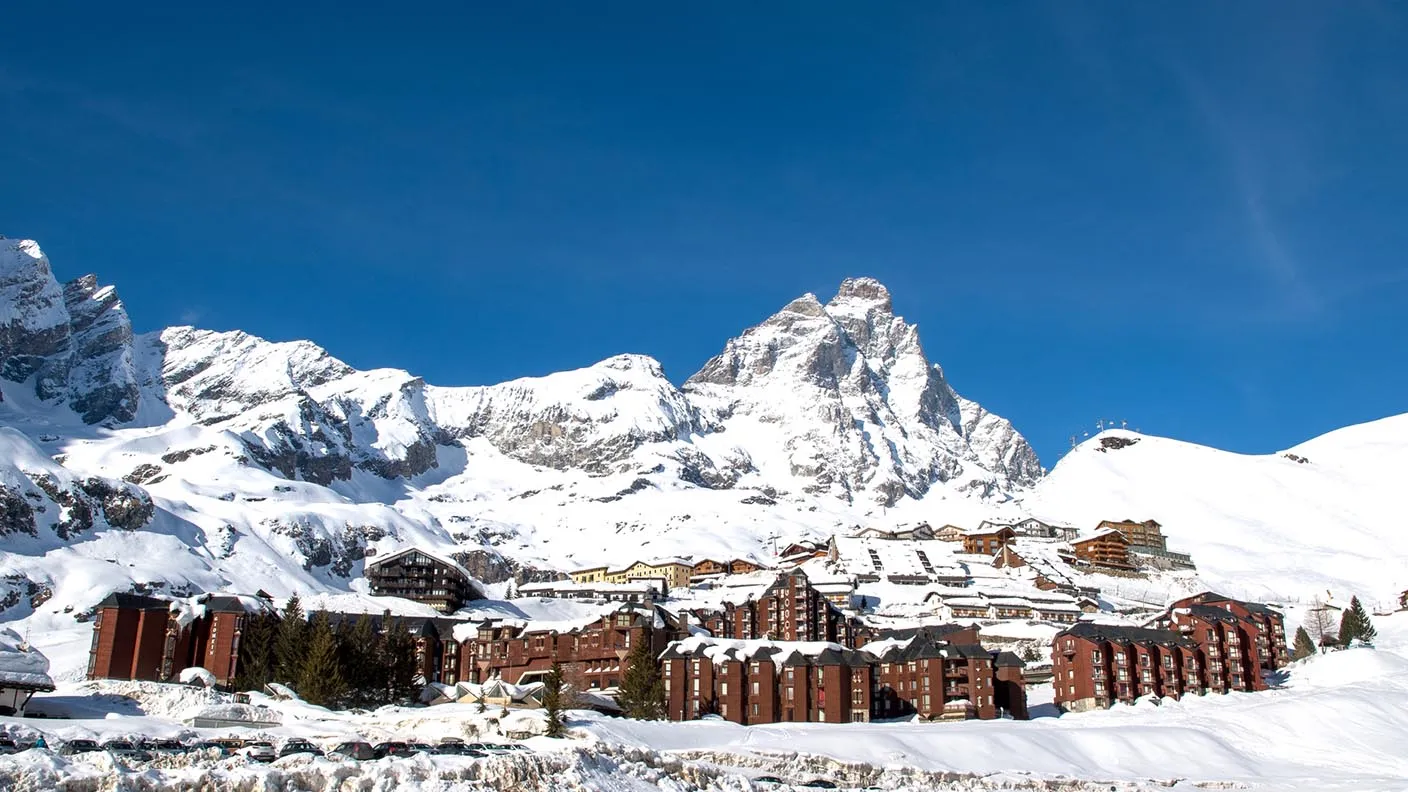
Oxygen saturation isn't one number for everyone. It shifts with age, with the altitude you're standing at, with your general health. A reading that would alarm a healthy twenty-year-old can be completely unremarkable in a two-minute-old newborn — or in a seventy-year-old who lives at 1,500 meters. Knowing your own reference range is the first step to using a pulse oximeter with judgment instead of anxiety.
If what you actually want is how much oxygen is in the air where you are — at sea level, at a mountain hut, or on an expedition — the Oxymeter calculator does that.
Normal SpO₂ values in healthy adults (sea level)
| SpO₂ | Interpretation | What to do |
|---|---|---|
| 97–100% | Normal — excellent oxygenation | Nothing |
| 95–96% | Normal — acceptable lower limit | Nothing; re-check if symptoms appear |
| 93–94% | Mild hypoxemia | See a doctor if it persists |
| 90–92% | Moderate hypoxemia | Same-day medical visit |
| < 90% | Severe hypoxemia | Emergency room |
| < 85% | Emergency | Call emergency services |
These values apply at sea level. Values shift lower as you gain altitude — see the table further down.
Normal SpO₂ by age group
Adults (18–65 years)
- Normal: 95–100%
- Acceptable lower limit: 94%
- Mild hypoxemia: 90–93%
- Moderate-to-severe hypoxemia: < 90%
Older adults (over 65)
Lung function declines gradually with age — that's physiology, not pathology. A SpO₂ of 93–96% can be entirely normal in a healthy older adult, especially past 75.
| Age | Typical normal SpO₂ (sea level) |
|---|---|
| 18–50 years | 97–100% |
| 51–65 years | 96–99% |
| 66–75 years | 95–98% |
| Over 75 | 93–97% |
These ranges are indicative. Anyone with a lung or heart condition has their own reference values, set by their doctor — general tables like this one don't apply to them.
Children and teens (1 month – 17 years)
In healthy children, normal values are nearly identical to adults: ≥ 95% is the norm, 94% the acceptable floor. A persistent reading below 93% warrants a pediatric evaluation.
Kids who live at altitude — above roughly 1,000 m — can run a slightly lower baseline (93–96%) without it being anything to worry about, especially if they were born there.
Newborns (0–30 days)
The first minutes of life are a case apart: the fetus runs on fetal hemoglobin, and the lungs haven't taken a breath yet.
| Moment | Acceptable SpO₂ |
|---|---|
| 1–2 minutes of life | 60–65% (lungs still transitioning) |
| 3–5 minutes | 70–80% |
| 6–10 minutes | 85–95% |
| Past 10 minutes | ≥ 90% |
| After 24 hours | ≥ 95% |
Past the first 24 hours, a newborn's SpO₂ persistently under 93% calls for urgent pediatric evaluation. Don't wait to "see if it passes."
Normal SpO₂ by altitude
This is the part people misread most. If you're at altitude, your "normal" SpO₂ is lower than at sea level — and that's expected, not a problem.
| Altitude | Reference point | O₂ available | Normal SpO₂ (acclimatized) |
|---|---|---|---|
| 0 m | Sea level | 100% | 97–100% |
| 1,000 m | Elevation of the first alpine huts | 89% | 95–98% |
| 2,000 m | Typical high-altitude mountain hut | 78% | 93–96% |
| 2,500 m | UIAA threshold for AMS risk | 74% | 91–95% |
| 3,000 m | Highest alpine mountain passes | 69% | 89–94% |
| 4,000 m | Typical elevation of the Alps' 4,000ers | 61% | 84–90% |
| 4,478 m | Matterhorn summit | 57% | 81–88% |
| 4,810 m | Mont Blanc summit | 55% | 78–86% |
Values calculated with the ICAO Standard Atmosphere model. See the full oxygen altitude chart for values from 0 to 8,848 m.
Living or sleeping above 1,000 m?
If you live at altitude or spend a lot of nights in mountain huts, your body has already partly adapted. A SpO₂ of 93–96% at 2,000 m in an acclimatized person isn't a warning sign. It's physiology.
If you've just gone from sea level to 2,000–3,000 m, expect a transient dip of a few points in the first days — that's acclimatization in progress, not illness. The Oxymeter calculator shows the expected value at your exact elevation.
SpO₂ and chronic conditions
People with COPD, severe asthma, or heart failure shouldn't measure themselves against the tables above. Doctors set individual targets — in advanced COPD, 88–92% is often the therapeutic goal, not a warning threshold. See the full guide on pulse oximeters and COPD.
During an asthma flare, SpO₂ can drop; below 92% during an attack points to severe asthma and needs a bronchodilator and medical evaluation right away. Outside of a flare, mild-to-moderate asthmatics run normal SpO₂.
Congestive heart failure can lower SpO₂ through pulmonary edema. A resting reading persistently under 94% in someone with heart failure is worth a cardiology check.
When to call a doctor or emergency services
| Situation | Action |
|---|---|
| SpO₂ < 94% persistent in a healthy adult, sea level | Same-day medical visit |
| SpO₂ < 90% in anyone, sea level | Emergency room |
| SpO₂ < 85% in any context | Call emergency services immediately |
| Drop of more than 5 points from your baseline, no obvious cause | See a doctor |
| Child with persistent SpO₂ < 93% | Pediatrician, urgently |
| Newborn with SpO₂ < 90% after 10 minutes of life | Neonatal emergency |
A single number tells you little. It's the trend — and the comparison against your own baseline — that actually matters.
Read more: How to use a pulse oximeter in the mountains | Best pulse oximeter for hiking | All guides on altitude health
FAQ
What's a normal oxygen saturation level for adults?
At sea level, 95–100% is normal. Past 70, 93–97% can be entirely normal. At altitude — at 2,000 m, for instance — 93–96% is normal for someone acclimatized.
What's a normal SpO₂ for children?
≥ 95% at sea level, same as adults. Newborns have their own much lower ranges in the first ten minutes of life; after 24 hours the reference goes back to ≥ 95%.
Does normal SpO₂ change with altitude?
Yes. At 2,000 m, 93–96% is normal for someone acclimatized. Lower air pressure means less oxygen per breath; the body compensates with more red blood cells and faster, deeper breathing. Use the Oxymeter calculator to check the expected value at your elevation.
When does low oxygen saturation become an emergency?
Below 90% at sea level needs urgent medical attention. Below 85%, in any context, call emergency services immediately. At altitude the thresholds shift upward — check the table above to orient yourself by elevation.
Want to know how much oxygen is actually in the air where you are — or where you're headed? Use the Oxymeter calculator to work out the percentage available at your elevation and compare it against the SpO₂ reading on your pulse oximeter.