As an Amazon Associate, Oxymeter earns from qualifying purchases.
Most people who get altitude sickness did one thing wrong, and it is almost always the same thing. They went up too fast. Not too high. Too fast. You can stand on a 4,000m summit perfectly fine if you earn the altitude one night at a time, and you can fall apart at 3,000m if you rush there in an afternoon.
That distinction is the whole game. Acute mountain sickness (AMS) is not a punishment for being unfit or unlucky. It is your body telling you it hasn't had time to adjust to thinner air. The good news is that AMS is one of the most preventable problems in the mountains. The bad news is that the prevention is boring, it takes patience, and most people skip it.
Here are seven rules that actually move the needle, ranked roughly by how much they matter. They come straight from the 2024 Wilderness Medical Society guidelines, the same playbook expeditions use. If you want to see the symptoms and treatment side instead, read our guide to altitude sickness. This one is about staying ahead of it.
The 24 hour window you keep ignoring
AMS rarely hits the moment you arrive. It shows up 6 to 24 hours after you reach a new altitude, which is exactly why it catches people out. You feel great at the trailhead, you push hard, and the headache arrives that night at the hut while you are blaming the food.
That delay is the single most useful fact about prevention. It means the choices you make today decide how you feel tomorrow. Ascend sensibly on day one and day two is comfortable. Crush day one and day two punishes you. Once you internalise that the body settles its account on a 24 hour delay, every rule below starts to make sense.
Rule 1: Ascend slowly (this is 80% of it)
If you only remember one rule, remember this one. Above about 3,000m, raise the altitude where you sleep by no more than 300 to 500m per night. Add a full rest day every 1,000m of gain, or every 3 to 4 days, whichever comes first.
Notice the phrasing. Sleeping altitude. You can hike to 4,200m during the day and it barely matters, as long as you come back down to sleep at 3,700m. The altitude your body spends the night at is what sets the pace of adjustment. Everything else is negotiable.
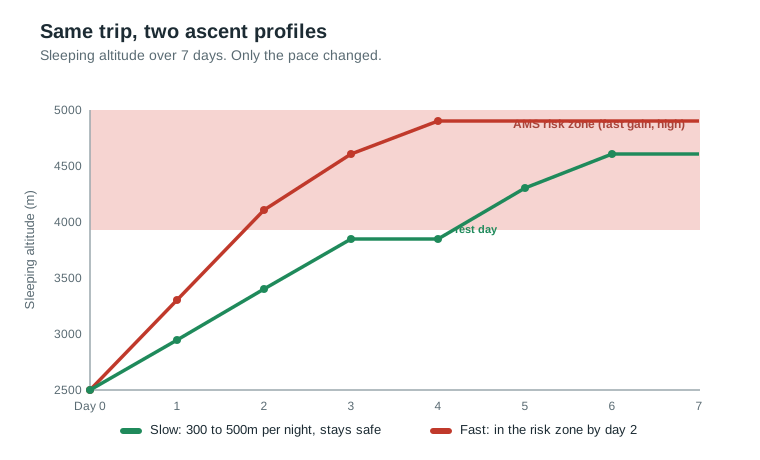
The chart above shows the same trip done two ways. Same start, same summit, same fitness. The fast line spends days inside the risk zone. The slow line never does. The only variable that changed was patience.
To know exactly what oxygen level your body will face on a given night, run your target sleeping altitude through the Oxymeter calculator before you go. Seeing that 3,500m means roughly 88% of sea level oxygen makes the 500m rule feel a lot less optional.
Rule 2: Climb high, sleep low
This is Rule 1 with a tactic bolted on. Spend the day going higher than where you will sleep, then drop back down for the night. Your body gets the hypoxic stimulus of the high point, which nudges acclimatization along, but it recovers overnight at a gentler altitude.
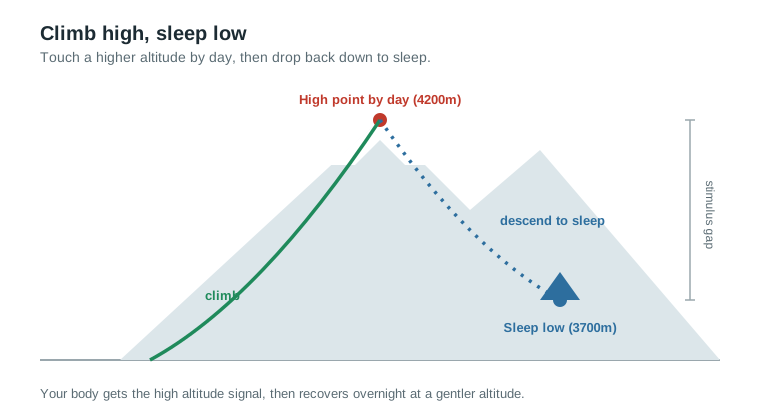
Every serious expedition on Earth runs this way. On Kilimanjaro the good operators build in a climb to a higher camp and back. On Denali, teams carry loads high and sleep low for weeks. You can copy the logic on any multi day trip, even a weekend in the Alps.
Rule 3: Hydrate, but don't drown yourself
Altitude air is dry and cold, and you lose water fast through breathing alone, before you have even broken a sweat. Dehydration produces headaches, fatigue and dizziness, the exact symptoms of early AMS, so it muddies the water at the worst possible moment.
Aim for roughly 3 to 4 litres a day above 3,000m. The honest test is your urine: pale yellow is the target. Here is the part nobody says, though. Drinking gallons does not prevent AMS, and forcing down water you don't need can dilute your blood sodium dangerously. Hydrate to normal. Don't treat water as a cure.
Rule 4: Watch your SpO₂, not just how you feel
Symptoms lie. They show up late, they vary person to person, and pride hides them. Your blood oxygen does not. A pulse oximeter clipped on your finger each morning gives you a number that often starts sliding hours before you feel anything wrong.
There is no single SpO₂ that means danger, because the normal value falls as you climb. At 3,500m an acclimatizing person might read 88% to 92% at rest, which would alarm a doctor at sea level and is fine up there. What matters is the trend. A morning reading that keeps dropping day after day, instead of stabilising or recovering, is the mountain warning you before your head does. For the full picture of what is normal at each altitude, see our oxygen levels chart.
Check it at rest, first thing, same routine every morning, and write the number down. A cheap oximeter that survives the cold is one of the best value pieces of safety gear you can carry. We cover which ones actually hold up in our pulse oximeter guide for hiking.
Rule 5: Skip alcohol and sleeping pills for the first 48 hours
Your first two nights at a new altitude are when your breathing control is most fragile, especially while you sleep. Alcohol and sedatives both blunt the drive to breathe, which is the last thing you want when oxygen is already scarce. They also wreck the quality of the sleep your body needs to adjust.
So the summit beer waits. So does the sleeping tablet you take to deal with the rough first nights at altitude, even though those nights are exactly when you are tempted to reach for it. Forty eight hours of restraint, then your body has settled enough that a glass of wine won't tip the balance.
Rule 6: Diamox, done right
Acetazolamide, sold as Diamox, is the one drug with strong evidence behind it for preventing AMS. It speeds up acclimatization by making your blood slightly more acidic, which tricks your body into breathing harder. It does not mask symptoms. It actually helps you adjust faster, which is why guides and travel clinics lean on it.
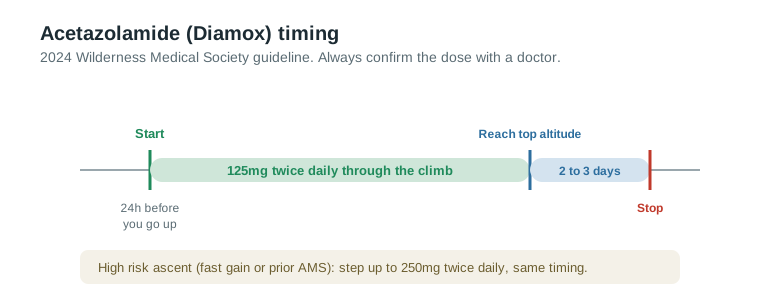
This is also the question people search for most, and get wrong most: how much, and when. The 2024 Wilderness Medical Society guideline is clear.
| Situation | Acetazolamide dose | When to start | How long |
|---|---|---|---|
| Low to moderate risk ascent | 125mg twice daily | 24 hours before going up | Until 2 to 3 days at your highest altitude |
| High risk ascent (fast gain, prior AMS) | 250mg twice daily | 24 hours before going up | Until 2 to 3 days at your highest altitude |
| Already have AMS (treatment) | 250mg twice daily | At onset of symptoms | Until symptoms clear, alongside descent |
A few things worth knowing before you fill a prescription. It is a sulfa related drug, so flag any sulfa allergy to your doctor. It makes your fingers and toes tingle and makes fizzy drinks taste flat, both harmless and both normal. And it is a mild diuretic, so it adds to your fluid needs. Most importantly, Diamox buys faster adjustment, it does not buy permission to ascend recklessly. Take it and still obey Rule 1. None of this replaces a conversation with a doctor, who should sign off on the dose for your specific trip and health.
Rule 7: Know when to descend (the rule that overrides all others)
Every rule above is about not getting sick. This one is about what to do when prevention fails anyway, because sometimes it does. The principle is simple and it is non negotiable: if symptoms are getting worse, go down. Not later. Then.
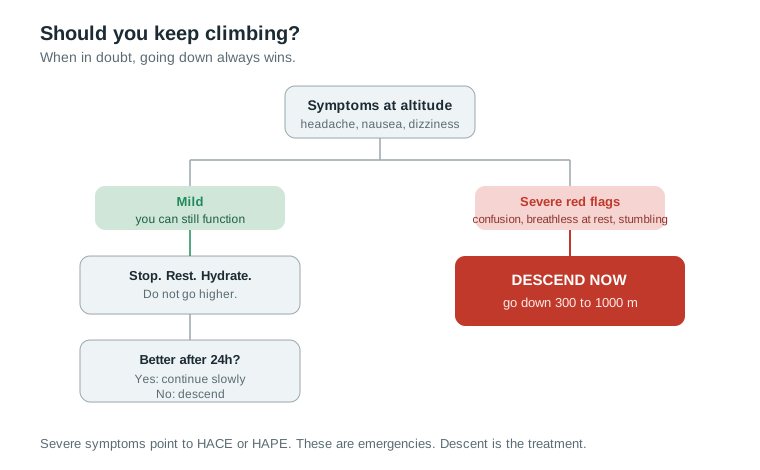
Mild AMS, a headache, some nausea, poor sleep, means stop climbing and let your body catch up. Do not go higher until it clears. But the moment you see the red flags, confusion, breathlessness while sitting still, a stumbling walk like someone drunk, those point to the deadly forms, HACE and HAPE, and the response is immediate descent of 300 to 1,000m. People die on mountains every year not because they got sick, but because they kept going after they did.
What does not work (stop wasting effort on these)
A lot of altitude folklore is just that. Garlic, often repeated, has no real evidence behind it. Coca tea, popular in the Andes, may ease a headache slightly but does not prevent AMS and will not let you skip acclimatization. Ginkgo biloba looked promising in early studies and then failed to hold up in better ones. Bottled oxygen for a quick sniff helps for minutes and changes nothing about your underlying adjustment.
The hard truth is that there is no shortcut. The things that work are slow ascent, time, and a short list of evidence backed measures. If a remedy promises to let you skip the patience, it is selling you something. Want practical techniques that genuinely help your numbers along the way? We cover them in how to increase oxygen saturation at altitude.
How to monitor your SpO₂ at altitude
Prevention has two halves. The plan you make before you leave, and the feedback you get on the mountain. The Oxymeter calculator handles the first: enter any sleeping altitude and see the oxygen percentage and the SpO₂ band you should expect, so you can build a sane ascent profile around it.
A pulse oximeter handles the second. It weighs nothing, it costs less than a day's hut fees, and it catches a falling oxygen trend before your head does. Check it at rest each morning, log the number, and treat a steady decline as a stop sign. For models that survive cold fingers and high altitude, see our tested guide to the best pulse oximeters for hiking. Together, the calculator and the oximeter cover both halves of the problem: what is coming, and what is real.
Frequently Asked Questions
What is the best way to prevent altitude sickness?
A slow ascent. Once you sleep above 3,000m, raise your sleeping altitude by no more than 500m per night and add a rest day every 1,000m of gain. Nothing else, not Diamox, not hydration, not fitness, protects you as reliably as giving your body time to adjust.
Can you prevent altitude sickness before you go?
Partly. Sleeping at altitude in the week before your trip, or spending time in a hypoxic tent, builds a head start. Acetazolamide started 24 hours before ascent also lowers your risk. But pre trip fitness alone does not prevent AMS. Fit people get it just as often as anyone else.
How fast can you ascend without getting altitude sickness?
Above roughly 3,000m, the guideline is to increase your sleeping altitude by 300 to 500m per day, with a rest day every 3 to 4 days or every 1,000m. You can climb higher during the day. It is the altitude where you sleep that drives the risk.
Does drinking water help altitude sickness?
It helps you avoid dehydration, which can mimic and worsen AMS symptoms. Aim for roughly 3 to 4 litres a day at altitude. But water does not prevent altitude sickness on its own, and overdrinking is its own risk. Drink to a pale yellow urine, not beyond.
What foods help with altitude sickness?
Carbohydrates. They need less oxygen to turn into energy than fat does, which matters when oxygen is the thing in short supply. Load up on whole grains, rice, oats and fruit. There is no magic food, but a carb heavy diet at altitude is easier on a struggling body.
Can you take anything to prevent altitude sickness?
Acetazolamide (Diamox) is the standard. The 2024 Wilderness Medical Society guideline suggests 125mg twice daily for low to moderate risk ascents, started 24 hours before going up and continued for 2 to 3 days at your highest altitude. Always confirm dosing with a doctor first.
Does acclimatization prevent altitude sickness?
It is the only thing that truly does. Acclimatization is the set of changes (faster breathing, more red blood cells, better oxygen delivery) that let your body cope with thin air. Every other measure just buys time or smooths the edges while acclimatization does the real work.
This article is informational and does not replace medical advice. Acetazolamide is a prescription drug; confirm the dose and suitability with a doctor before your trip. For climbs above 4,000m or if you have any heart or lung condition, consult a physician trained in high altitude medicine.