Oxygen saturation (SpO₂) is the most direct compass for understanding how your body is responding to altitude. A pulse oximeter tells you, in real time, what percentage of your blood's haemoglobin is carrying oxygen. But normal values at altitude are very different from those at sea level — and confusing them leads to poor decisions.
What is oxygen saturation (SpO₂)?
SpO₂ measures the percentage of haemoglobin in peripheral capillary blood that is carrying oxygen. A reading of 98% means 98% of haemoglobin molecules are loaded with O₂. At sea level, a healthy adult at rest has SpO₂ between 95% and 100%.
Pulse oximeters calculate this value using photoplethysmography: two LEDs — one red (660 nm) and one infrared (940 nm) — pass through finger tissue, and a sensor measures the absorbed light. Since oxygenated and deoxygenated haemoglobin absorb the two colours differently, the ratio allows SpO₂ to be calculated with a standard margin of error of ±2%.
Why SpO₂ decreases with altitude
As you gain altitude, atmospheric pressure drops. The percentage of oxygen in the air remains constant (20.9%), but the partial pressure of oxygen (pO₂) decreases proportionally. The lungs receive less "push" to transfer oxygen to the blood, and SpO₂ falls.
This is exactly the parameter that the Oxymeter calculator measures in real time: the percentage of oxygen available relative to sea level, calculated using the ICAO Standard Atmosphere formula. For the full oxygen-percentage breakdown by elevation (in feet and meters), see oxygen levels at altitude: complete chart.
SpO₂ normal ranges by altitude
The values below are expected averages for a healthy adult without acclimatization (first exposure) and for an acclimatized subject after several days:
| Altitude | O₂ Available | Barometric Pressure | SpO₂ Unacclimatized | SpO₂ Acclimatized |
|---|---|---|---|---|
| 0 m (sea level) | 100% | 760 mmHg | 97–100% | 97–100% |
| 1,000 m | 89% | 674 mmHg | 96–99% | 96–99% |
| 1,500 m | 84% | 634 mmHg | 95–98% | 96–99% |
| 2,000 m | 79% | 596 mmHg | 93–97% | 95–98% |
| 2,500 m | 74% | 560 mmHg | 91–95% | 94–97% |
| 3,000 m | 70% | 526 mmHg | 88–93% | 92–96% |
| 3,500 m | 65% | 493 mmHg | 85–91% | 90–95% |
| 4,000 m | 61% | 462 mmHg | 82–88% | 88–93% |
| 4,500 m | 57% | 432 mmHg | 79–85% | 85–91% |
| 5,000 m | 54% | 405 mmHg | 75–82% | 82–89% |
| 5,500 m | 50% | 379 mmHg | 70–79% | 78–86% |
| 6,000 m | 47% | 354 mmHg | 65–75% | 73–82% |
| 7,000 m | 41% | 309 mmHg | 57–68% | 65–77% |
| 8,000 m | 35% | 267 mmHg | 50–62% | 58–70% |
| 8,849 m (Everest) | 33% | 253 mmHg | 42–58% | 55–70% |
Note: These are average ranges. Individual variability is significant. An SpO₂ of 85% at 4,000 m in an acclimatized, asymptomatic person is not abnormal. Context is everything.
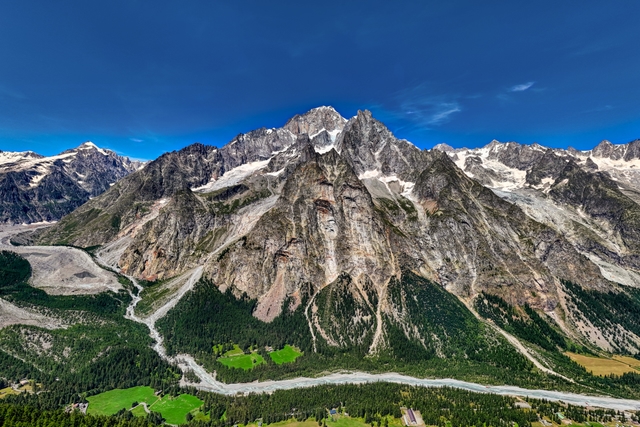
To translate these numbers into real peaks: at 4,000 m — the band of Mont Blanc — an SpO₂ of 82–88% is expected without acclimatization. At 5,000–5,600 m, the altitude of climbs like Kilimanjaro and Mount Elbrus, the expected range drops to 75–82%.
How to interpret readings at altitude
SpO₂ alone is not enough: it must always be integrated with clinical status (symptoms present or absent?) and trend (falling or stable?).
Practical interpretation guide
| SpO₂ at rest | Interpretation | Recommended action |
|---|---|---|
| > 90% | Good acclimatization for the altitude | Continue — monitor daily |
| 85–90% | Marginal acclimatization | Reduce physical activity, hydrate, do not ascend further |
| 80–85% | Insufficient acclimatization | Consider descent, consult your group, consider supplemental oxygen |
| < 80% | Potential emergency | Descend immediately — the altitude is too high for this body right now |
Three SpO₂ alarm signals
Regardless of the absolute value, these three patterns require immediate attention:
- Drop > 5% compared to the previous day at the same altitude — indicates the body is not acclimatizing but deteriorating
- SpO₂ failing to recover above 90% within 10 minutes of rest after physical exertion
- Variability > 5% between two consecutive resting measurements — signal of physiological instability
How to use a pulse oximeter at altitude
When to measure
- On waking, after 5 minutes of rest: the most representative measurement of baseline status
- After 15 minutes of moderate walking: assesses cardiovascular response to exertion
- Before sleeping: identifies deterioration that occurred during the day
Factors that make readings unreliable
- Cold hands (peripheral hypothermia): vasoconstriction reduces capillary flow to the finger
- Nail polish (especially dark or glitter): absorbs LED wavelengths
- Movement during measurement: motion artefacts generate falsely low readings
- Direct sunlight on the sensor: interferes with photoplethysmography
The solution: always measure in shade, after warming your hands, with the finger still for at least 30 seconds before reading the value.
Fingertip device vs smartwatch
Dedicated fingertip devices (Nonin, Masimo, Beurer) have a margin of error of ±2% and are the standard in mountain medicine. Smartwatches with wrist SpO₂ sensors (Apple Watch, Garmin) offer the advantage of continuous overnight monitoring, but with lower accuracy (±3–5%) and more motion artefacts.
For serious expeditions, the recommendation is to use both: the smartwatch for overnight trend monitoring, the fingertip device for reference measurements. See the best pulse oximeters for hiking and altitude for a full comparison of models tested at elevation, or the guide on how to use a pulse oximeter correctly at altitude to avoid the most common reading errors.
Two fingertip models suited to altitude, both Budget tier in our comparison and FDA 510(k) cleared with a stated accuracy of ±2%:
- Zacurate Pro 500DL — about 30 hours on two AAA batteries.
- mibest OLED — same accuracy class, OLED display, about 20 hours on two AAA batteries.
Both are rated from 32°F: above the treeline, carry them in an inside pocket rather than in the pack.
SpO₂ and the Oxymeter calculator: using them together
The Oxymeter calculator tells you how much oxygen is available in the environment (% O₂ relative to sea level). The pulse oximeter tells you how your body is responding to that environment. They provide complementary information:
- Low ambient O₂ with high SpO₂ = good acclimatization
- Moderate ambient O₂ with low SpO₂ = insufficient acclimatization — slow your ascent, typical of climbers tackling Aconcagua or other peaks above 5,000 m without adequate progression
Using both, noting both values daily in an expedition log, is the most effective way to monitor physiological progression.
Read more: Altitude Sickness: Symptoms, Prevention and Treatment | Oxygen levels at every altitude: complete chart | All guides on altitude health
SpO₂ on Specific Peaks
For a complete profile — altitude, expected SpO₂ range, difficulty, and oxygen comparison bar — visit each peak page:
- Mont Blanc (4,810 m) — Expected SpO₂: 80–91%
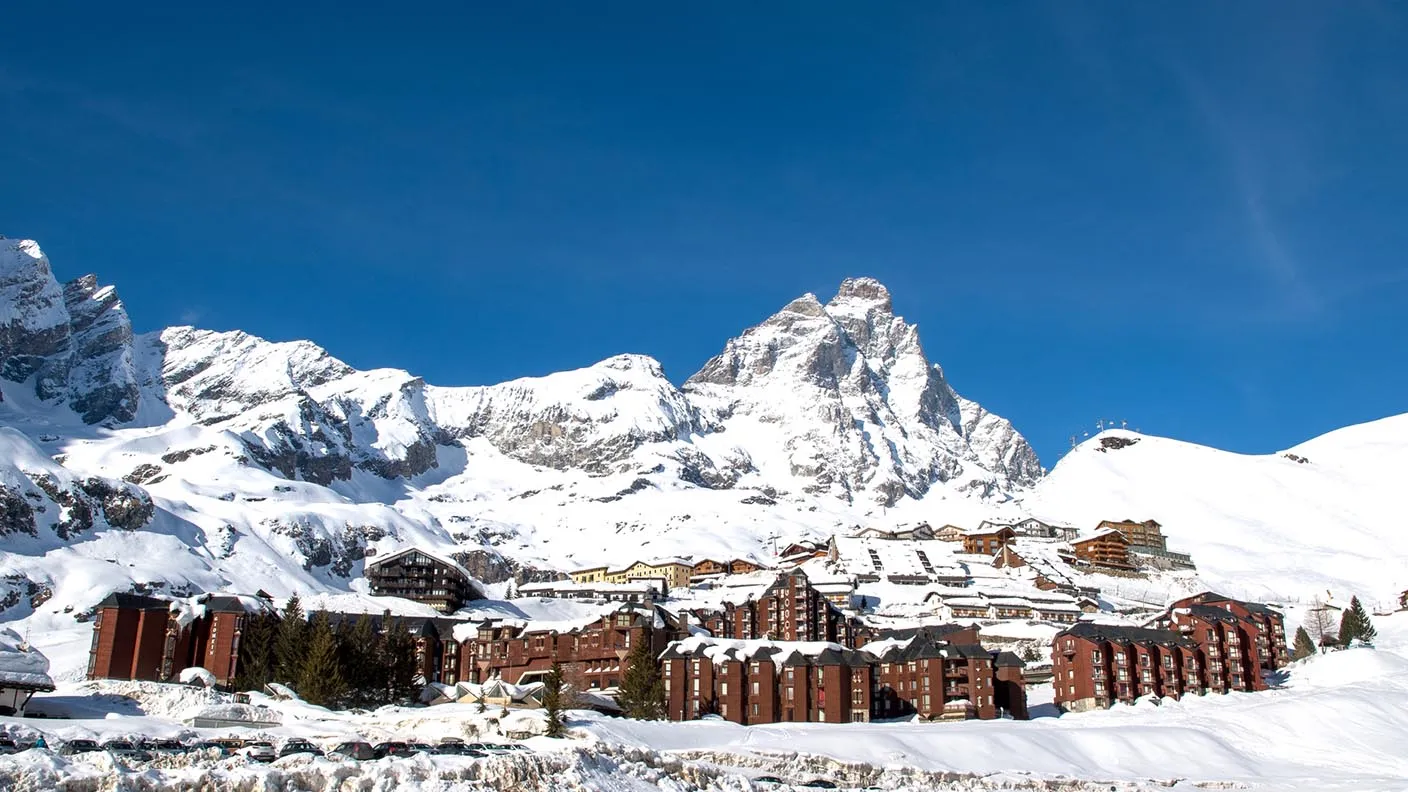
- Matterhorn (4,478 m) — Expected SpO₂: 83–93%
- Kilimanjaro (5,895 m) — Expected SpO₂: 72–83%
- Aconcagua (6,962 m) — Expected SpO₂: 65–77%
Read more: All guides on altitude health
Frequently Asked Questions
What are normal oxygen saturation values at altitude?
At 3,000 m, SpO₂ between 88% and 93% is normal for an unacclimatized person; 92–96% for an acclimatized one. At 5,000 m, 75–82% is expected without acclimatization, 82–89% with acclimatization. Absolute values must always be contextualized with symptoms and trends from the previous 24 hours.
Below what SpO₂ should I descend?
A stable SpO₂ below 80% at rest, or one that does not recover above 75–80% after prolonged rest, is a signal requiring descent. UIAA guidelines indicate not ascending further if resting SpO₂ is < 80% at any altitude. Descent of even 500–1,000 m almost always produces rapid recovery.
Why does oxygen saturation decrease with altitude?
Atmospheric pressure drops as altitude increases, while the oxygen fraction in the air (20.9%) stays constant at every elevation. What falls is the partial pressure of oxygen (pO₂): at sea level it is roughly 21 kPa; at 8,849 m it drops to about 6.6 kPa. With less driving pressure, the lungs transfer fewer O₂ molecules into the bloodstream with each breath — and SpO₂ falls as a result.
What is a dangerously low SpO₂ at altitude?
Below 80% at rest is the threshold that UIAA guidelines treat as a clear signal to descend, regardless of elevation. Between 80–85%, combine the number with symptoms: headache, confusion, or difficulty breathing make any reading in that range more serious. At sea level, below 94% warrants medical attention — context shifts everything at altitude.