Allalinhorn
Pennine Alps, Canton of Valais (CH)
Oxygen Analysis — Oximeter
Oxygenation along the route
Oxygen comparison
Required Preparation
At 4027 m, with 63% oxygen available, perceived effort increases compared to sea level.
How to prepare
- Occasional training: specific preparation and progressive acclimatization are required before the summit.
- Regular training: plan acclimatization stops and monitor oxygen saturation.
- Endurance training: respect physiological adaptation times even if fitness level is high.
- Consider a sports medical assessment before the ascent.
Route and Trail
Peak Guide
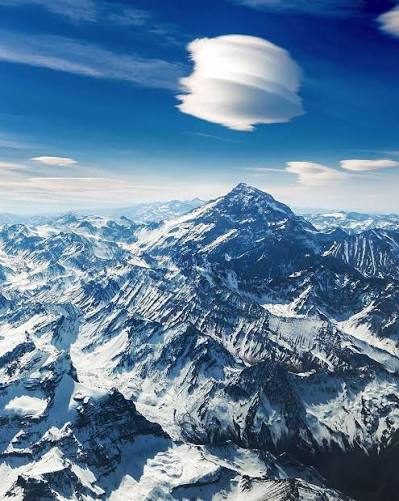
The Allalinhorn touches 4027 meters in the Pennine Alps and holds a record that sets it apart from any other 4000-meter peak in the Alps: the Metro Alpin in Saas-Fee-the world's highest underground railway-takes the mountaineer to 3456 meters before he has even taken a step on a glacier. This unparalleled accessibility has turned the Allalinhorn into the most popular proving ground for those tackling their first 4,000-meter peak, and one of the most popular peaks in the entire Alps. At the summit, the air holds 63% of the oxygen of sea level: an altitude that does not forgive overly aggressive ascent rates, even when the route is technically easy.
Datasheet.
| Data | Value |
|---|---|
| Altitude | 4027 m a.s.l. |
| Location | Pennine Alps, Canton Valais (CH) |
| Difficulty | F (Easy) - glacier with crampons required |
| Oxygen available | 63% above sea level |
| Height difference | ~571 m from Mittelallalin (3456m) |
| Total distance | 6.0 km A/R |
| Route development | 6.5 km |
| Climbing time | 2.5-3.5 hours |
| Recommended period | June - September |
| Starting point | Mittelallalin (3456m) - Metro Alpin from Saas-Fee |
Route
Summary.
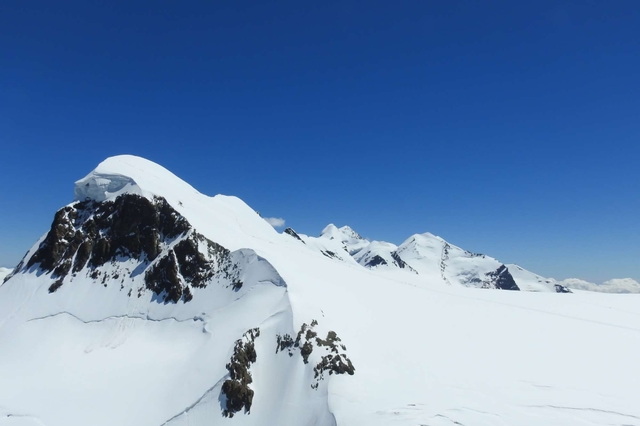
The normal route to the Allalinhorn follows the Feegletscher from Mittelallalin to Feejoch (3825m), the pass separating the Allalinhorn from the Strahlhorn, and then ascends the northeast ridge to the summit. This is a glacier route with no pronounced technical difficulties, but requires experience in progression with crampons and rope: the glacial terrain hides crevasses and the final sections have slopes of up to 35°.
Key points.
Mittelallalin (3456m - 0 km) The end station of the Metro Alpin is the starting point of the ascent. At 3456m one is already beyond the altitude of the main Alpine huts: progressive acclimatization is replaced by the instantaneous altimetric gain of the cable car. The Drehrestaurant Allalin-the world's highest rotating restaurant-is located here: a convenient stop before setting off. Take a 20-30 minute break at the station to give your body time to adjust to the altitude.
Traverse the Feegletscher and approach to the Feejoch (~3650m - 1.5 km) From the Mittelallalin you descend briefly to the Feegletscher and advance in a southerly direction to the Feejoch. The glacier traverse is well-traveled in high season but requires attention: crevasses, snow bridges and changes in condition change from week to week. Roped progression is mandatory.
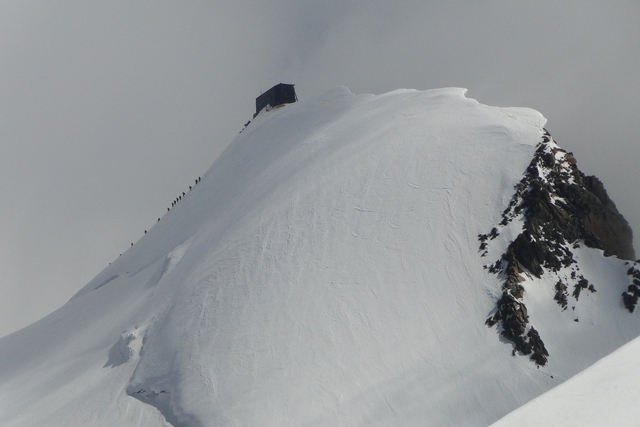
Feejoch (3825m - 2.0 km) Feejoch is the key point of the ascent: the pass between Allalinhorn and Strahlhorn, 369m elevation gain from the start. From here the summit appears in its entirety. The northeast ridge of the Allalinhorn rises with moderate slopes (25-35°) and mixed snow and rock sections in the higher sections. On windy days the Feejoch can be very exposed: assess weather conditions before proceeding.
Allalinhorn (4027m - 3.0 km) The ridge from the Feejoch to the summit is the most challenging section: steeper inclines, mixed terrain and, with the altitude exceeding 4000m, the hypoxic effect takes its toll on the legs and breathing rate. The summit is a narrow snowy plateau with panoramic views ranging from Monte Rosa (4634m) to the Weissmies (4017m), from the Strahlhorn (4190m) to the Breithorn.
Variants noted.
- From Felskinn (2991m): departure from the middle station of the Metro Alpin (or the Felskinn cable car from Saas-Fee). Longer route about 1.5 km each way; total elevation gain ~1036m. Preferred by those who want a more gradual acclimatization.
- Hohlaubgrat Route (AD-): northwest ridge from Adlerpass (3789m). Requires stronger mountaineering skills; not suitable as first experience on a 4000.
Practical Notes.
- Signage: absent on glacier - trail visible in high season but always rely on GPS and compass
- Crevasses: Feegletscher has variable crevasse areas - check with SAC or Metro Alpin staff for up-to-date conditions
- Departure time: recommended leaving the station by 7:00-8:00 a.m. to avoid hot hours and deteriorating firn in the afternoon
- Metro Alpin: check seasonal schedules on the official Saas-Fee website
⚠️ Note: Feegletscher conditions change significantly from season to season. Always check with your local SAC or Metro Alpin station for up-to-date conditions before departure.
Oxygenation and Breathing
At 4027m the partial pressure of oxygen is 63% above sea level - the same elevation range as Piz Bernina (4049m) and Punta Giordani (4046m). The specificity of the Allalinhorn lies in the way the altitude is reached: the Metro Alpin transports the climber from Saas-Fee (1800m) to 3456m in less than 20 minutes. This instantaneous elevation gain - 1656m in one cable car ride - completely bypasses the progressive acclimatization that normally accompanies the ascent on foot.
What to expect by elevation zone.
- 3456m (Mittelallalin): body immediately senses altitude. Shorter breathing, possible mild headache in sensitive individuals. The 20-30 minute break at the station is essential before leaving.
- 3456-3825m (Mittelallalin → Feejoch): glacier crossing is aerobically moderate, but altitude weighs: expect a 20-30% slower walking pace than at sea level.
- 3825-4027m (Feejoch → summit): the last 200m of elevation gain is the most strenuous. The steeper slope combined with the maximum elevation makes every step conscious.
Typical saturation (SpO₂).
At the summit, a healthy, acclimatized person typically records a SpO₂ between 78% and 84%. Values below 72% with associated symptoms (persistent headache, nausea, ataxia) indicate the need for immediate descent.
Tips for breath management.
- Overnight in Saas-Fee (1800m) the night before: do not ascend in the day from low altitude. An overnight stay in Saas-Fee before the ascent significantly reduces AMS risk.
- Mandatory break at Mittelallalin: 20-30 minutes of adaptation at the station before leaving. Drink, eat something light, observe how the body reacts.
- Slow and steady pace: the temptation to run on a seemingly easy glacier is risky. One step every two seconds, rhythmic breathing, pause every 30-45 minutes of walking.
- Active hydration: at 3456m and above dehydration progresses rapidly even without feeling thirsty. At least 0.5 liters per hour on the move.
Warning Signals (AMS).
⚠️ Consider getting off if they appear:
- Headache that does not improve with hydration and rest
- Persistent nausea or vomiting
- Loss of balance or confusion
- Difficulty breathing at rest
The advice above is informational and not a substitute for medical advice. For ascents above 4000m, consult a physician specializing in high-altitude medicine.
Preparation
Physical preparation
The Allalinhorn is technically one of the most accessible 4000m peaks in the Alps, but it is no walk in the park. The ideal candidate already has experience in snowy terrain with crampons and knows the basics of roped progression on a glacier. It is not suitable for those tackling the glacier for the first time ever.
Minimum recommended experience:
- At least 2-3 trips with crampons on snow or ice
- Basic knowledge of roped progression (cadence, rope management)
- Good aerobic fitness: the elevation gain is small (571m) but the altitude weighs
**Recommended propaedeutic climbs.
- Pyramid Vincent (4215m) or Punta Giordani (4046m): Monte Rosa, similar glacial morphology
- Gran Paradiso (4061m): 4000 m on glacier with longer elevation gain - excellent aerobic preparation
Acclimatization
Recommended plan (2 days):
- Day 1: Arrival in Saas-Fee (1800m). Short hike in the area (optional). Overnight stay in Saas-Fee.
- Day 2: Metro Alpin to Mittelallalin (3456m) by 7:00 am. Break 20-30 min. Ascent Feejoch → summit → descent to Mittelallalin → return to Saas-Fee.
Compact plan (1 day - only for those with recent acclimatization):
- Overnight at altitude the night before (e.g., Berghaus Felskinn at 2991m). Only for those who have climbed at similar altitudes in previous weeks.
Essential equipment.
- 12-point crampons on rigid high mountain boots
- Ice axe
- Harness with lanyard and glacier rope
- Alpine helmet
Recommended equipment
- Category 4 sunglasses
- SPF 50+ sunscreen
- Pocket pulse oximeter
- High waterproof gaiters
Frequently Asked Questions
How much oxygen is available at the summit of the Allalinhorn?
At 4027m, available oxygen is 63% above sea level. Atmospheric pressure drops to about 624 hPa. At this altitude hypoxia slows muscle recovery and increases perceived exertion even on flat terrain.
Is the Allalinhorn suitable as the first 4000m?
It is among the most accessible 4000m peaks in the Alps thanks to the Metro Alpin (start at 3456m), but requires glacier experience with crampons and roped progression. It is not recommended for those tackling the glacier for the first time ever. For those who already have 2-3 snow outings with equipment, it is an excellent choice as a first 4000.
Does the Metro Alpin replace acclimatization?
No. The Metro Alpin takes the body to 3456m in a few minutes, without the gradual adaptation that occurs by climbing on foot. It is essential to stay overnight in Saas-Fee the night before and take a 20-30 minute break at the Mittelallalin station before starting the ascent.
Is a mountain guide required to climb the Allalinhorn?
It is not mandatory for those with documented experience on glaciers with crampons and rope. For those who are tackling their first 4000 or have little experience on crevassed glacier, an IFMGA mountain guide is strongly recommended.
Sources and References.
- SAC-CAS - Allalinhorn normal route - official technical report and difficulty
- Camptocamp - Allalinhorn normal route from Mittelallalin - updated report and conditions.
- ICAO Standard Atmosphere (Doc 7488/3) - formula calculation atmospheric pressure and oxygen at altitude
- Wilderness Medical Society - AMS/HACE/HAPE guidelines.
- UIAA Mountain Medicine - medical protocols at altitude
Sources and References
The information on this page has been verified from the following sources
Related peaks
Discover other peaks in the same area