Margherita Hut (Signalkuppe)
Monte Rosa, Italy/Switzerland
Oxygen Analysis — Oximeter
Oxygen comparison
Required Preparation
At 4554 m, with 58% oxygen available, perceived effort increases compared to sea level.
How to prepare
- Occasional training: specific preparation and progressive acclimatization are required before the summit.
- Regular training: plan acclimatization stops and monitor oxygen saturation.
- Endurance training: respect physiological adaptation times even if fitness level is high.
- Consider a sports medical assessment before the ascent.
Route and Trail
Peak Guide
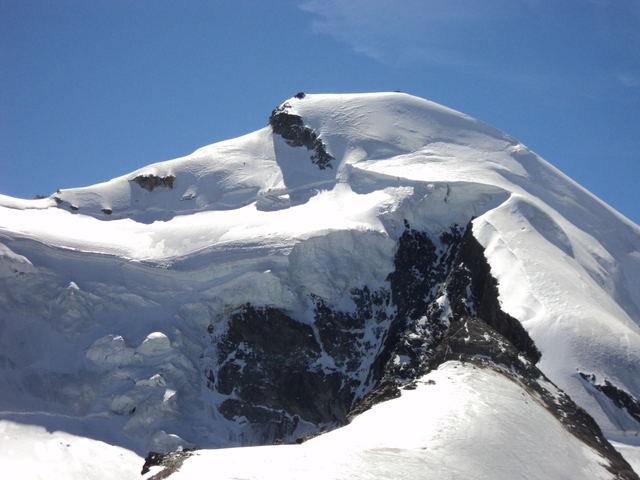
The highest hut in Europe is a towering mythological milestone perched on Signalkuppe at 4554 meters. An immense glacial excursion that touches the skies of the Monte Rosa massif, offering an absolute physical and mental experience even for those who do not chew on extreme rock climbing.
Quick Facts
| Detail | Value |
|---|---|
| Altitude | 4554 m a.s.l. |
| Mountain group | Monte Rosa |
| Difficulty | F (Easy) – alpine grade |
| Total elevation gain | ~1300 m (from Punta Indren, cable car) |
| Ascent time | 2 days (overnight at hut) |
| Recommended season | Late June – early September |
| Starting point | Alagna Valsesia (VC) or Gressoney-la-Trinité (AO) |
| Summit hut | Margherita Hut (CAI/SAC) |
Oxygenation and Acclimatization
At 4554 meters there is no room for joking: your lungs will barely find the 58% of the oxygen they are used to. The altitude here is the undisputed and ruthless opponent; your legs might be made of steel, but the lack of air levels anyone's performance. There is no heroism against Mountain Sickness: prior acclimatization is the only real free pass.
The strategy is elementary but vital. Spending the night at intermediate altitudes like Rifugio Gnifetti (3611 m) or Mantova is a moral obligation to your own body. During the freezing morning snake-march on the glacier, force yourself into vigorous diaphragmatic breathing: synchronize your step to your exhale, blow out the stale air forcefully, and inhale deeply to flood your blood with vital molecules. If crippling nausea or hammering headaches set in, or if you stagger as if drunk, remember that Monte Rosa will remain there for a long time. And you must go back down.
The Ascent
The approach directly to the base huts Whether you opt for the painless mechanized ascent from Alagna (up to Punta Indren) or the itinerary from Gressoney to Passo dei Salati, the first day serves to test your breath and determination. From the cable car terminal you immediately tackle the gently sloping glacier or steep equipped rocks before pitching base camp at Rifugio Mantova or the highly trafficked Rifugio Gnifetti (3611 m), a perfect balcony overlooking tomorrow.
Into the belly of the glacier towards the 4000s At night, the silence is broken only by the metallic scraping of crampons. From Gnifetti, you climb the beaten track on the tormented Lys glacier. You avoid large crevasses by zigzagging towards the Col del Lys. Here, having passed 4200 meters, the goal appears, still very distant. The trench carved by countless passages traverses the high plateau at length before the endless and asphyxiating final "slide" that mounts towards Signalkuppe and the eponymous Margherita hut. The slope is not extreme, but the rarity of oxygen demands rhythmic pauses counted to the beat of your own heart.
Physical Preparation
You don't need to be a climber: the terrain is graded Easy (F). But you are on one of the most imposing alpine glaciers and it is mandatory to possess a sure foot, mental tenacity for over 8 hours of marching at inhuman altitudes, and solid management of an ice axe and rope maneuvers in the unfortunate event of a snow bridge collapsing.
Anyone with several outings covering 1000/1200 meters of elevation gain at constant paces under their belt can aspire to this summit, but prior exposure above three thousand meters is the deciding factor between a journey of pure contemplative enjoyment and a nauseating odyssey.
| Starting level | Preparation time | Key Phases |
|---|---|---|
| Trained Hiker | 2-4 months | Insistence on long outings and acclimatization at 3000-3500 meters. |
| Expert Alpinist | A few weeks | Two nights at intermediate altitudes before the assault to reset the organism. |
Equipment
You travel on eternal snows. There is no tolerance for those climbing dressed for light trail running. The wind on the ridge above 4200 meters sweeps with a freezing violence.
Essential:
- Crampons (12 points) well calibrated on rigid boots, ice axe
- Harness, slings, rope and crevasse rescue kit (indispensable without a mountain guide)
- Climbing helmet
Strongly Recommended:
- Wraparound category 4 lens sunglasses (the glare burns corneas and retinas)
- Total-block sunscreen, high-altitude gloves
- Modular and heavy clothing: even in August summit temperatures hover below zero
- Piping hot thermos and immense patience
When to Go
July and August are the prime months with indescribable crowding but extremely solid tracks. By late September the glaciers open up and the route becomes much trickier and technical. Off-season, polar conditions require maximum prudence. Checking in with the local hut wardens always guarantees precious tips on the overnight freeze.
Sources and References
The information on this page has been verified from the following sources
Related peaks
Discover other peaks in the same area