Annapurna I
Himalayas, Nepal
Oxygen Analysis — Oximeter
Oxygen comparison
Required Preparation
At 8091 m, with 35% oxygen available, perceived effort increases compared to sea level.
How to prepare
- Occasional training: this altitude requires mountaineering experience and specific preparation.
- Regular training: plan multiple days of progressive acclimatization at intermediate altitudes.
- Endurance training: physical fitness alone does not replace acclimatization at these altitudes.
- Consult a mountain medicine specialist before departure.
Route and Trail
Peak Guide
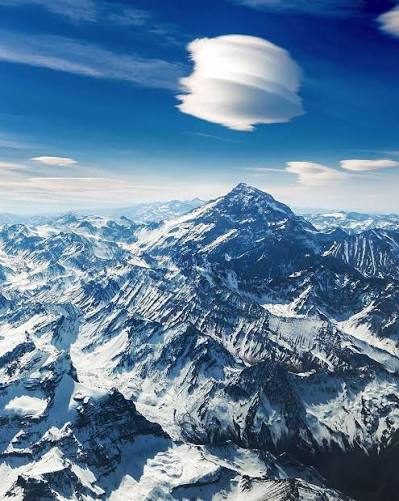
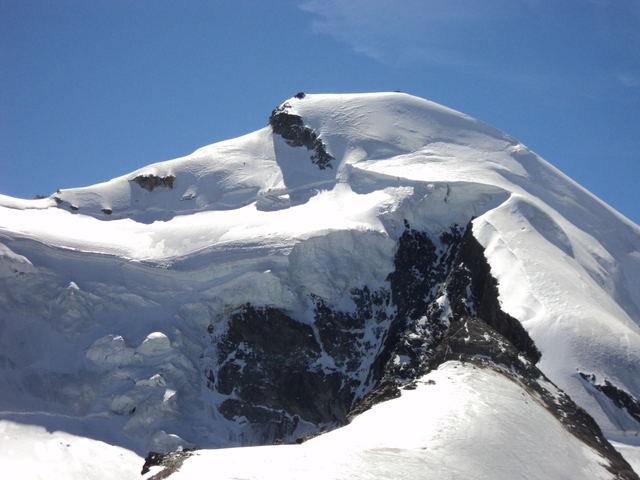
June 3, 1950. Maurice Herzog and Louis Lachenal stand on the summit of Annapurna I — 8,091 metres above sea level, in the heart of the Nepalese Himalaya. It wasn't even the mountain they'd come for. The French expedition had originally targeted Dhaulagiri, pivoted mid-journey, and found themselves pointing at Annapurna instead. None of that matters now. What matters is that on that day, a human being stood on top of an 8,000-metre peak for the first time in history. The air up there holds just 35% of the oxygen you're breathing right now. Herzog lost every finger and every toe to frostbite on the descent. He came home and wrote the best-selling mountaineering book ever published.
Annapurna I is the world's tenth-highest mountain. It's also, by a wide margin, the most dangerous of the 14 eight-thousanders in terms of the summit-to-death ratio. The historical fatality rate exceeds 30%. That number doesn't soften with time.
Technical Overview
| Data | Value |
|---|---|
| Elevation | 8,091 m a.s.l. |
| Range | Nepalese Himalaya, Gandaki Province |
| Names | Annapurna I, Morung Himal |
| Difficulty | ED+ — Extreme mountaineering; avalanche terrain, crevassed glacier |
| Elevation Gain from BC | 3,961 m (North BC 4,130 m → Summit 8,091 m) |
| Estimated Round Trip | ~8 km (normal north route) |
| Time from Camp IV | 7–10h (C4 7,400 m → Summit) |
| Full Expedition | ~50–60 days (including acclimatization rotations) |
| Best Season | April – May (summit window: late April) |
| Starting Point | Annapurna North Base Camp (4,130 m) |
| High Camps | C1 (5,150 m), C2 (5,700 m), C3 (6,500 m), C4 (7,400 m) |
| First Ascent | June 3, 1950 — Maurice Herzog & Louis Lachenal (France) |
Route: North Face / Northwest Ridge
The standard route follows the North Face and Northwest Ridge — the same line Herzog and Lachenal climbed in 1950. It's the only route attempted with any regularity. There is no easy way up Annapurna. Every section carries a specific hazard.
North Base Camp → Camp I
4,130 m → 5,150 m | Gain: +1,020 m | Time: 6–8h
From Base Camp, you cross the North Annapurna Glacier — heavily crevassed terrain that shifts every season. Crampons, ice axe, and rope are mandatory from the first step. Camp I sits at approximately 5,150 m, at the foot of the north face proper.
Camp I → Camp II
5,150 m → 5,700 m | Gain: +550 m | Time: 4–5h
Mixed ice and snow terrain across open slopes. Avalanche risk increases sharply here — the lateral walls above feed debris onto the route throughout the day. The narrow window of safer passage is early morning, when the snowpack is still consolidated. You don't linger.
Camp II → Camp III: the technical crux
5,700 m → 6,500 m | Gain: +800 m | Time: 5–8h
This is the hardest and most dangerous section of the climb. Mixed terrain, unstable rock, slopes exposed to serac fall. Fixed ropes are repositioned every season because the route shifts with the glacier. The historical accident record on Annapurna is concentrated almost entirely in this altitude band. You move fast and you don't stop.
Camp III → Camp IV
6,500 m → 7,400 m | Gain: +900 m | Time: 5–7h
More open mixed terrain, less vertical than the section below. But you're already in critical territory — above 6,500 m the body starts to deteriorate rather than acclimatize. Judgment degrades. Often imperceptibly. Camp IV at 7,400 m is the last staging point before the summit push.
Camp IV → Summit
7,400 m → 8,091 m | Gain: +691 m | Time: 7–10h
You leave between midnight and 2:00 a.m. The pace is brutally slow — 50 steps, pause, go again. At 7,400 m the air holds 38% of sea-level oxygen; at the summit, 35%. The difference registers in your legs on every step. The final summit ridge requires technical attention even in good conditions: wind-packed snow, exposure on both sides, altitude suppressing concentration. Everyone who reaches the top already has the descent in front of them. That's the harder half.
Oxygen and Acclimatization
At 8,091 m, barometric pressure drops to approximately 358 hPa — compared to 1,013 hPa at sea level. Every breath you take on the summit delivers one-third of the oxygen it would at the coast. Typical summit SpO₂ for acclimatized climbers using supplemental oxygen is 50–65%. Without oxygen: below 50%, often significantly lower.
The Death Zone begins at 8,000 m — just 91 metres below Annapurna's summit. Above that threshold, the body doesn't acclimatize. It deteriorates. And the cognitive decline is the really dangerous part: you think you're reasoning clearly while you're making decisions that are objectively wrong. Timing, weather, the descent — all compromised.
Standard protocol involves at least 4 acclimatization rotations during the 40–50 days at Base Camp:
- BC → C1 → return (first rotation, 1–2 days)
- BC → C2 → return (second rotation)
- BC → C3 → return (third rotation — critical)
- Summit push from C4
The rule doesn't change: climb high, sleep low. You return to Base Camp between rotations, sometimes lower. Acclimatization isn't built by continuous ascent — it's built by the descents.
Severe AMS symptoms at these altitudes — persistent headache, vomiting, ataxia (inability to walk a straight line), mental confusion — are an emergency. You don't wait until morning. You descend immediately. At 8,000 m, HACE (high altitude cerebral edema) and HAPE (high altitude pulmonary edema) can be fatal within hours, and distinguishing between them in the field is nearly impossible. The response is the same regardless: descend immediately, supplemental oxygen if available, dexamethasone if available.
Medical note: This information is educational and doesn't replace professional medical advice. Before attempting an Himalayan expedition of this scale, consult a specialist in high-altitude medicine.
Preparation
Annapurna isn't the culmination of a standard progression. It requires a specific curriculum — and even climbers who have that curriculum don't always come back.
Minimum prerequisites: at least one eight-thousander with supplemental oxygen already under your belt, ideally Cho Oyu (8,188 m, considered the most accessible of the 8,000ers) or Manaslu. One or more technical seven-thousanders before that. No Annapurna without 8,000m experience. That's not a suggestion.
Physically: VO₂max ≥ 65 ml/kg/min. Training needs to include multi-day outings with 20–25 kg pack weight, advanced steep ice technique, and the ability to sustain moderate effort for 10–12 consecutive hours at altitude.
Technically: steep ice (45–65°), extended jumar use on fixed ropes, autonomous supplemental oxygen system management, glaciated terrain navigation.
Essential gear:
- Oxygen mask and regulator (Poisk system or equivalent)
- Oxygen cylinders (4–6 × 6L for the summit push)
- High-altitude suit rated to −40°C
- Double mountaineering boots
- 12-point technical crampons, rigid frame
- Technical ice axe
- Jumar, descender, lightweight harness
- VHF radio
Season: April–May. The post-monsoon window (September–October) exists but historically delivers worse conditions. Spring pre-monsoon is the statistically better bet for a summit window.
Cost: commercial Annapurna expeditions run $25,000–50,000 USD, including Nepal government permit, Base Camp manager, high-altitude porters, oxygen, and evacuation insurance.
The Numbers: Why Annapurna Kills More Than Everest
Calling Annapurna "dangerous" undersells it. The historical fatality rate exceeds 30% — three times K2's 9.5%, fifteen times Everest's ~2%. In recent decades the numbers have improved to roughly 15–20%, but Annapurna remains the deadliest of all 8,000-metre peaks by this metric. It's not close.
Three structural factors drive this.
Avalanches. The north face of Annapurna is one of the highest-avalanche-risk environments in 8,000-metre mountaineering. The lateral walls feed debris onto the normal route throughout the day. Most deaths on Annapurna are avalanche deaths — not falls, not altitude illness. That distinction matters for how you approach risk management on this mountain.
The normal route is genuinely dangerous. On Everest's South Col route, the main hazard is human traffic. On Annapurna, the mountain itself is the hazard. Seracs, crevasses, exposed slopes — all in combination, all on the only viable route. It's not technically harder than K2's Abruzzi Spur, but it's relentlessly hazardous.
Unpredictable weather. Annapurna sits on the leading edge of the terrain that receives the first waves of the monsoon. Spring summit windows are short, and the transition from stable to storm can happen in hours.
Frequently Asked Questions
How much oxygen is there at the summit of Annapurna I?
At Annapurna I's summit (8,091 m), available oxygen is 35% of sea-level concentration. Barometric pressure drops to approximately 358 hPa — versus 1,013 hPa at sea level. Every breath delivers one-third of the oxygen it would at zero altitude. The vast majority of climbers use supplemental oxygen above 7,000 m.
Is Annapurna really the world's most dangerous mountain?
Among the 14 eight-thousanders — yes, historically. The cumulative fatality rate exceeds 30%, more than triple K2's 9.5% and fifteen times Everest's. The danger comes primarily from avalanche risk on the north face and unpredictable weather, not from pure technical difficulty. Recent seasons have seen improvement, but Annapurna remains the deadliest eight-thousander by fatality ratio.
Who was the first to summit Annapurna I?
On June 3, 1950, French climbers Maurice Herzog and Louis Lachenal reached the summit of Annapurna I — becoming the first humans to summit any 8,000-metre peak. The descent was catastrophic: both suffered severe frostbite. Herzog lost all his fingers and toes. His book Annapurna, published in 1951, became the best-selling mountaineering book of all time — over 11 million copies.
What's the best time to climb Annapurna I?
April–May is the primary summit window, with early-to-mid April offering the highest statistical probability before the monsoon arrives. September–October provides a post-monsoon alternative, but conditions are generally less stable. Winter is not a viable option for standard expeditions.
How many people have summited Annapurna I?
As of 2025, approximately 400 climbers have reached the summit of Annapurna I — one of the lowest totals among all 8,000-metre peaks. Commercial expeditions have increased in recent years, but Annapurna has never been democratized at the scale of Everest. Given the structural nature of the avalanche risk on the normal route, it probably won't be.
Sources and References
The information on this page has been verified from the following sources
Related peaks
Discover other peaks in the same area