Castore
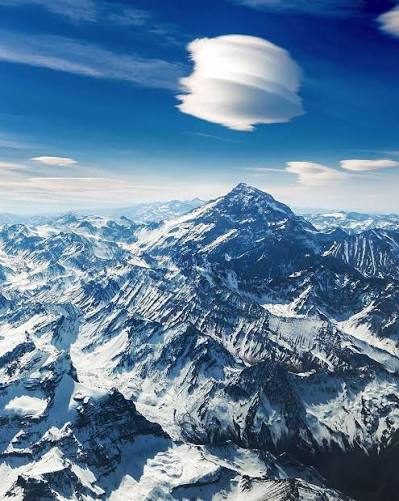
Pennine Alps, Monte Rosa Massif, Italy/Switzerland
Oxygen Analysis — Oximeter
Oxygenation along the route
Oxygen comparison
Required Preparation
At 4228 m, with 61% oxygen available, perceived effort increases compared to sea level.
How to prepare
- Occasional training: specific preparation and progressive acclimatization are required before the summit.
- Regular training: plan acclimatization stops and monitor oxygen saturation.
- Endurance training: respect physiological adaptation times even if fitness level is high.
- Consider a sports medical assessment before the ascent.
Route and Trail
Peak Guide
Castore and its twin Pollux (4092m) share one of the most evocative names in Alpine mountaineering: the Dioscuri of Greek mythology, sons of Zeus, transformed into a constellation. But Castore is more than poetic mythology — at 4228 metres it is one of the most logical and approachable first 4000m peaks of the Monte Rosa Massif. The air at the summit holds 61% of the oxygen available at sea level: a significant altitude where the body genuinely notices the thinning air, yet one that is manageable with even a brief acclimatization. The plan of the Monte Rosa positions it perfectly between Piramide Vincent (4215m) and the Lyskamm — a natural progression for climbers building experience in high alpine terrain.
Quick Facts
| Data | Value |
|---|---|
| Altitude | 4228 m a.s.l. |
| Location | Pennine Alps, Monte Rosa Massif, Italy/Switzerland border |
| Twin summit | Pollux / Polluce (4092m) |
| Difficulty | PD+ (Fairly Easy) — glacier, short final ridge |
| Available oxygen | 61% compared to sea level |
| Elevation gain | ~1016 m from Passo dei Salati (3212m) |
| Total distance | 10.0 km return |
| Route development | 11.5 km |
| Ascent time | 4–6 hours from Passo dei Salati (overnight at Rifugio Quintino Sella) |
| Best season | July – August |
| Starting point | Passo dei Salati (3212 m) — cable car from Gressoney-La-Trinité |
Route
Overview
The normal route to Castore crosses the Felik Glacier from Passo dei Salati, reaches Colle del Felik (4062m), and then climbs the summit ridge to the top. The route is predominantly on glacier; the final ridge is relatively short and significantly less exposed than the neighboring Lyskamm. The complete ascent — with an overnight at Rifugio Quintino Sella — is generally considered the best introduction to the 4000m peaks of Monte Rosa when approaching from Italy.
Key Points
Approach: Gressoney-La-Trinité → Passo dei Salati (3212m) The cable car from Gressoney-La-Trinité (1640m) reaches Passo dei Salati (3212m) in about 30 minutes. This is the access point for the Felik Glacier and all peaks of the area: Castore, Lyskamm, and Capanna Margherita via Colle del Lys.
Rifugio Quintino Sella al Felik (3585m — 2.0 km from Passo dei Salati) Across the glacier plateau, the CAI-managed Rifugio Quintino Sella is reached in about 1–1.5 hours. Parties attempting Castore, Lyskamm, and other area peaks all pass through here. The night at 3585m is the essential first acclimatization step. Advance booking is mandatory in high season.
Colle del Felik (4062m — 5.5 km from Passo dei Salati) The glacier is ascended progressively to the col through crevassed zones that change each season. At the col, the routes split: Castore branches right (northwest), Lyskamm branches left along the main ridge. Maximum slope angle in this section exceeds 35°.
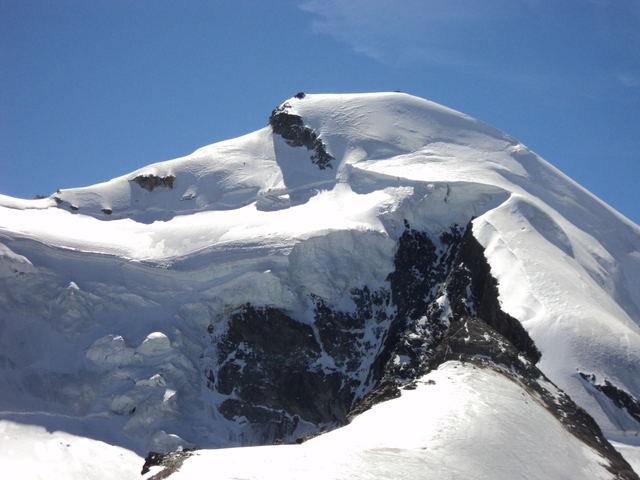
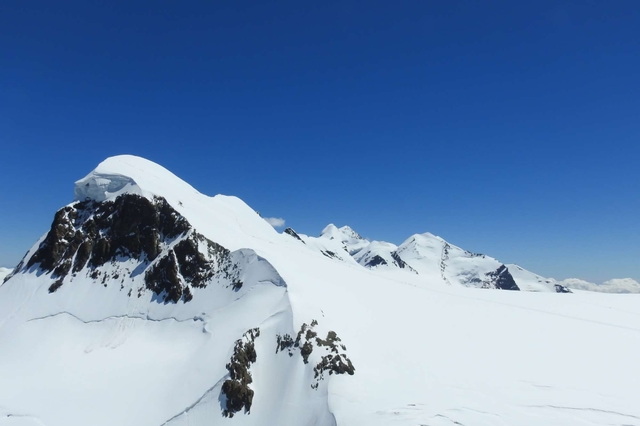
Castore (4228m — 7.0 km from Passo dei Salati) From the col the snowy summit ridge is climbed over approximately 166m. The terrain is less exposed than the Lyskamm but still demands attention: on hard snow or ice the crampon technique must be solid, and cornices may exist on the Swiss side. The summit offers an outstanding panorama of the entire Monte Rosa massif, with Pollux close by and the long Lyskamm ridge stretching westward.
Practical Notes
- Waymarking: absent on the glacier — updated GPS track essential
- Huts: Rifugio Quintino Sella al Felik (3585m) — advance booking mandatory in high season
- Water: no reliable source above the hut — carry at least 1.5L per person
- Cable car: Gressoney-La-Trinité – Passo dei Salati; check seasonal timetable
⚠️ Warning: Felik Glacier conditions change every season. Check current conditions with Rifugio Quintino Sella staff or the local CAI section before departure.
Oxygenation and Breathing
At 4228m the partial pressure of oxygen is 61% of sea level. Castore sits in the altitude band where hypoxia becomes unmistakably real — the final hundreds of metres to the summit require a noticeably slower, more deliberate effort — yet it remains far below extreme altitudes. For many Italian mountaineers, Castore is their first true 4000m Alpine peak: high altitude shifts from an abstract concept to a concrete physical experience.
What to Expect by Altitude Zone
- 3212–3585m (Passo dei Salati → Rifugio Sella): light effort on the glacier plateau. Good opportunity to calibrate pace and hydration.
- 3585–4062m (Rifugio Sella → Colle del Felik): growing fatigue, especially in the upper third of the glacier. Some may notice mild headache — a signal not to be ignored.
- 4062–4228m (Colle del Felik → Summit): the final 166m feel heavier than the absolute altitude might suggest. Slow pace, short breaks, diaphragmatic breathing.
Typical SpO₂ at Summit
A healthy, acclimatized person typically records an SpO₂ between 76% and 81% at the summit. Values below 72% with symptoms warrant immediate attention.
Breathing Tips
- Calibrated pace on the glacier: do not start too fast in the first hours — the glacier is long and fatigue accumulated early will be paid back on the final 166m.
- Diaphragmatic breathing: 4 seconds inhale through the nose, 6 seconds exhale through the mouth — start from Rifugio Sella upward.
- Smart breaks: every 15–20 minutes, even briefly (2–3 minutes), prevent lactic acid build-up at altitude.
- Continuous hydration: at these altitudes dehydration accelerates AMS onset; drink 500ml before departure and regularly throughout.
AMS Warning Signs
⚠️ Consider descending if the following appear:
- Headache not improving with hydration and rest
- Persistent nausea or vomiting
- Loss of balance or confusion
- Breathing difficulty at rest
The advice above is informational and does not replace medical advice. For ascents above 4000m, consult a physician specializing in altitude medicine.
Preparation
Physical Preparation
Castore is ideal for those with trekking experience at altitude who want to make their first glacier 4000m. It does not require rock climbing or the management of exposed ridges at the level of the Lyskamm, but it does demand familiarity with crampons and ice axe on snow and ice, and the ability to move roped on a glacier.
Recommended preparatory ascents:
- Breithorn West (4164m): often cited as the "easiest 4000m in the Alps" — an excellent stepping stone before Castore
- Gran Paradiso (4061m): longer glacier route, good aerobic preparation with a similar non-technical character
Castore itself is widely considered the most natural and logistically convenient preparation for the Lyskamm, sharing the same starting point and most of the glacier approach.
Acclimatization
Standard plan:
- Day 1: arrive at Gressoney-La-Trinité, cable car to Passo dei Salati, hike to Rifugio Quintino Sella (3585m) and overnight
- Day 2: summit attempt — departure 4:00–5:00 AM from the hut
Extended plan with more acclimatization:
- Day 1: overnight at Rifugio Quintino Sella (3585m)
- Day 2: acclimatization outing toward Colle del Felik (4062m) and back
- Day 3: summit attempt
Essential Equipment
- 12-point crampons on rigid high-altitude boots
- Ice axe
- Harness with tether and glacier rope (minimum 30m per team)
- Climbing helmet
Recommended Equipment
- Ice screws (1–2 per rope team — less critical than on the Lyskamm)
- Category 4 sunglasses
- Sunscreen SPF 50+
- Pocket pulse oximeter
- Waterproof high gaiters
FAQ
How much oxygen is there at the summit of Castore?
At 4228m the available oxygen is 61% of sea level. Atmospheric pressure drops to approximately 598 hPa compared to 1013 hPa at sea level. Fatigue in the final section of the ascent is noticeably greater than at lower altitudes, but with even minimal acclimatization most fit mountaineers can manage the altitude.
Is Castore suitable as a first 4000m peak?
Yes, Castore is one of the most recommended first 4000m peaks of the Monte Rosa Massif. Its PD+ grade and relatively direct route make it accessible to those with basic glacier experience. It is essential not to underestimate the altitude and to respect glacier safety rules: roped movement, GPS or guide.
What is the relationship between Castore and Pollux?
Castore (4228m) and Pollux / Polluce (4092m) are two adjacent summits in the Monte Rosa Massif, separated by Colle del Castore. The names refer to the Dioscuri of Greco-Roman mythology — the celestial twins of the Gemini constellation. Alpinistically, Pollux is less frequented but accessible on a similar route; some combine both in a single outing.
Is Castore on the way to the Lyskamm?
Yes: Rifugio Quintino Sella and Colle del Felik are the same access points for the Lyskamm. Climbers aiming for the Lyskamm often ascend Castore first to acclimatize in the area and assess glacier conditions. Castore is the most natural and logistically convenient preparation for the Lyskamm.
Sources and References
- Vie Normali — Castore — Italian-side route description
- CAI Valle d'Aosta — technical data and mountain safety
- Peakbagger — Castore (Kastor) — verified GPS coordinates
- ICAO Standard Atmosphere (Doc 7488/3) — atmospheric pressure and oxygen calculation formula
- Wilderness Medical Society — AMS/HACE/HAPE guidelines
- UIAA Mountain Medicine — altitude medicine protocols
Sources and References
The information on this page has been verified from the following sources
Related peaks
Discover other peaks in the same area