Dom
Pennine Alps, Mischabel Group, Switzerland
Oxygen Analysis — Oximeter
Oxygenation along the route
Oxygen comparison
Required Preparation
At 4545 m, with 58% oxygen available, perceived effort increases compared to sea level.
How to prepare
- Occasional training: specific preparation and progressive acclimatization are required before the summit.
- Regular training: plan acclimatization stops and monitor oxygen saturation.
- Endurance training: respect physiological adaptation times even if fitness level is high.
- Consider a sports medical assessment before the ascent.
Route and Trail
Peak Guide
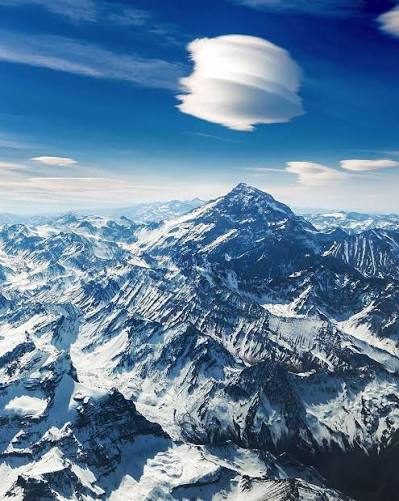
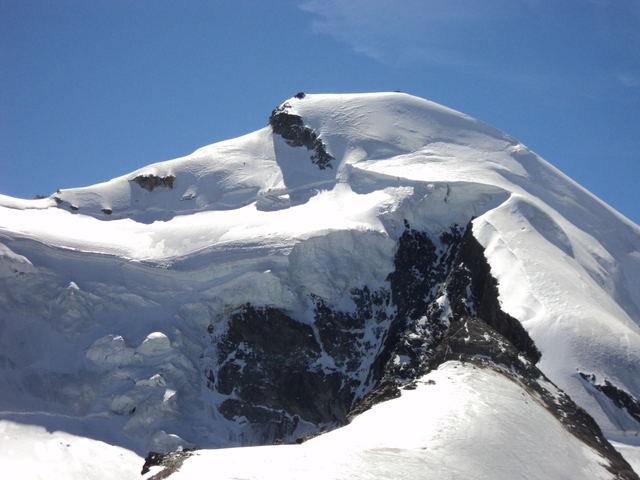
The Dom reaches 4545 metres in the heart of the Mischabel Group, above the village of Randa in the Swiss canton of Valais. It holds a record that sets it apart from every other major Alpine summit: it is the highest mountain lying entirely within Switzerland — unlike Dufourspitze, which shares its summit with Italy on the national border. Seen from Randa or the Mattertal road, the Dom presents itself as a massive bastion of ice and rock, the long Festigletscher draping its southern flank. At 4545 metres the air holds just 58% of the oxygen available at sea level: full high-altitude territory, where acclimatization and controlled pace are physiological requirements, not options.
Quick Facts
| Data | Value |
|---|---|
| Altitude | 4545 m a.s.l. |
| Location | Pennine Alps, Mischabel Group, Switzerland |
| Geographic note | Highest mountain lying entirely within Switzerland |
| Difficulty | AD+ (Fairly Difficult) — long glacier, final ridge |
| Available oxygen | 58% compared to sea level |
| Elevation gain | ~1605 m from Dom Hütte (2940m) |
| Total distance | 15.0 km return from Dom Hütte |
| Route development | 16.5 km |
| Ascent time | 6–8 hours from Dom Hütte (overnight stay mandatory) |
| Best season | July – August |
| Starting point | Dom Hütte (2940 m) — trail from Randa (1408m) |
Route
Overview
The normal route to the Dom is a classic two-day glacier ascent. Day one is the approach from Randa to Dom Hütte (approximately 3 hours); day two covers the long Festigletscher, reaches the Festijoch (4315m), and follows the summit ridge to the top. Roped movement on the glacier is mandatory throughout.
Key Points
Approach: Randa → Dom Hütte (2940m) From Randa (1408m) — reachable by train on the Matterhorn Gotthard Bahn Visp–Zermatt line — a well-marked trail climbs to Dom Hütte in approximately 3 hours with 1532m of ascent. The approach is strenuous but non-technical and already constitutes a first acclimatization step. The SAC Dom Hütte hosts parties heading for the Dom, Täschhorn, and other Mischabel summits; advance booking is essential.
Festigletscher — lower section (to ~3800m — 3.5 km from Dom Hütte) From the hut the Festigletscher is accessed immediately. The lower section is relatively open with fewer crevasses; in the early morning hours — when parties typically depart between 3 and 4 AM — the ice is firm and snow bridges more reliable. Following an updated GPS track or a fresh trail from the previous party is strongly advised.
Festijoch (4315m — 6.0 km from Dom Hütte) The Festijoch is the key col of the ascent. Here the glacier gives way to the ridge leading to the summit. In good conditions the passage is straightforward; on hard ice or verglas it demands confident crampon technique. From the col the views over the Valais and Mattertal are spectacular.
Dom (4545m — 7.5 km from Dom Hütte) From the col the summit ridge is climbed over approximately 230m of elevation. The terrain is mixed — alternating snow and exposed rock — with increasing exposure toward the summit cross. In strong wind the ridge can become very demanding. Descent follows the same route.
Practical Notes
- Waymarking: absent on the glacier — verified GPS track or local knowledge essential
- Huts: Dom Hütte SAC (2940m) — advance booking mandatory in high season; tel. +41 27 967 21 53
- Train access to Randa: Matterhorn Gotthard Bahn, Visp–Zermatt line
- Water: no reliable source above Dom Hütte — carry at least 1.5L per person for summit day
- Weather: the Dom is exposed to Atlantic fronts; check MeteoSwiss forecasts before departure
⚠️ Warning: The Festigletscher is a rapidly retreating glacier that changes significantly each season. Crevassed zones shift; snow bridges that hold in the morning may not hold in the afternoon. Check current conditions with Dom Hütte staff or the SAC. Do not attempt in unstable forecast conditions.
Oxygenation and Breathing
At 4545m the partial pressure of oxygen is 58% of sea level. What distinguishes the Dom from other peaks at similar altitude is its length: the Festigletscher demands hours of sustained glacier travel before the summit ridge is even reached. Hypoxia accumulates gradually — energy management across the entire route matters as much as the final push to the top.
What to Expect by Altitude Zone
- 2940–3800m (Dom Hütte → Festigletscher): moderate effort in the opening hours. Cold and footing on ice demand focus; hypoxia begins to register around 3500m.
- 3800–4315m (crevasse zone → Festijoch): progression slows and each step takes more breath. Pace must drop noticeably compared to the lower glacier.
- 4315–4545m (Festijoch → Summit): full high-altitude zone. The ridge demands intermittent high-intensity efforts. Frequent short breaks on the ridge are more effective than long stops on exposed terrain.
Typical SpO₂ at Summit
A healthy, acclimatized person typically records an SpO₂ between 73% and 77% at the summit. Values below 70% with symptoms require immediate descent.
Breathing Tips
- Slow from the start: do not let early-morning enthusiasm on the glacier burn aerobic reserves before the Festijoch.
- Systematic diaphragmatic breathing: 4 seconds inhale through the nose, 6 seconds exhale through the mouth — start from the first hour on the glacier.
- Pressure breathing on the ridge: exhale forcefully against pursed lips on the steeper final 230m.
- Active hydration: at altitude the sensation of thirst is blunted by hypoxia — drink every 30 minutes regardless.
AMS Warning Signs
⚠️ Consider descending if the following appear:
- Headache not improving with rest and hydration
- Persistent nausea or vomiting
- Confusion, loss of balance or coordination
- Persistent dry cough or breathing difficulty at rest
The advice above is informational and does not replace medical advice. For ascents above 4000m, consult a physician specializing in altitude medicine.
Preparation
Physical Preparation
The Dom is a long, sustained ascent requiring good aerobic fitness and glacier familiarity. Technical difficulty is lower than the Lyskamm, but the total elevation from Dom Hütte to summit and back makes it physically demanding — the formal grade understates the endurance required.
Recommended preparatory ascents:
- Gran Paradiso (4061m): essential glacier-route 4000m with a similar long approach profile
- Breithorn West (4164m): altitude reference point in the neighboring massif
- Alphubel (4206m): a Mischabel Group summit close to the Dom with glacier travel on the same terrain — the most specific preparation available
Acclimatization
Minimum recommended plan:
- Day 1: arrive at Randa or Täsch, climb to Dom Hütte (2940m) and overnight
- Day 2: acclimatization outing to 3400–3600m on the glacier, return to Dom Hütte
- Day 3: summit attempt — departure 3:00–4:00 AM from Dom Hütte
Essential Equipment
- 12-point crampons on rigid high-altitude boots
- Technical ice axe
- Harness with tether and glacier rope (minimum 30m per team)
- Climbing helmet
- Ice screws (2–3 per person) and locking carabiners
Recommended Equipment
- Category 4 sunglasses (long glacier with intense reflection)
- Sunscreen SPF 50+ (reapply every 2 hours)
- Pocket pulse oximeter
- Waterproof high gaiters
- Emergency bivy
- Trekking poles (useful on the trail to Dom Hütte)
FAQ
How much oxygen is there at the summit of the Dom?
At 4545m the available oxygen is 58% of sea level. Atmospheric pressure drops to approximately 573 hPa compared to 1013 hPa at sea level. The body compensates with elevated breathing and heart rate — which is why acclimatization and a measured pace on the long glacier are essential.
Is the Dom harder or easier than the Matterhorn?
The Dom is rated AD+ (Fairly Difficult), the Matterhorn D (Difficult). The Dom is longer and more sustained but technically less demanding: it involves no exposed rock climbing and the hardest sections are confined to the summit ridge. However, the total elevation of summit day makes it physically more selective than its formal grade suggests.
Is the Dom the highest mountain in Switzerland?
No: the highest mountain in Switzerland is Dufourspitze (4634m), which sits on the Italian border. The Dom (4545m) holds the record as the highest mountain lying entirely within Swiss territory — a geographic distinction that makes it a sought-after goal for mountaineers.
Is a guide required for the Dom?
For climbers with glacier experience and the ability to move roped on snow, the Dom is feasible independently in normal conditions. For anyone without experience on a long crevassed glacier or unable to navigate on open terrain without a marked trail, a UIAGM-certified guide is strongly recommended.
Sources and References
- SAC — Dom normal route — technical data and route description
- Vie Normali — Dom — southern-side route description
- Peakbagger — Dom (Mischabel) — verified GPS coordinates
- ICAO Standard Atmosphere (Doc 7488/3) — atmospheric pressure and oxygen calculation formula
- Wilderness Medical Society — AMS/HACE/HAPE guidelines
- UIAA Mountain Medicine — altitude medicine protocols
Sources and References
The information on this page has been verified from the following sources
Related peaks
Discover other peaks in the same area